
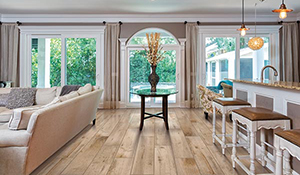
Vinyl and laminate are two of the easiest flooring categories to maintain, but the wrong care can damage either. Both look similar but have different vulnerabilities. Vinyl handles moisture better; laminate handles scratches better. Each needs slightly different cleaning approaches for the best long-term results.
Knowing the differences—and the few practices to avoid on both materials—keeps these floors looking new for the full design lifespan. Neglected, the wear paths show inside five years.
The Short Answer
Sweep the grit off, damp-mop weekly with a pH-neutral cleaner made for the material, and keep standing water away from the seams. That covers both floors. The one thing that separates them is moisture: vinyl tolerates a genuinely damp mop, and laminate does not.
Laminate is a photographic layer over a compressed wood core. The surface is water-resistant and the core is not, so water that reaches a seam swells the board from the inside and it never comes back down. Vinyl has no wood in it, which is why it forgives what laminate does not — though its seams are water-resistant rather than waterproof too, whatever the box says.
Neither can be refinished. That is the fact underneath every recommendation here: the wear layer is a fixed budget, and cleaning either spends it or protects it.
| Vinyl plank | Laminate | |
|---|---|---|
| Core | No wood — PVC or composite | HDF, a compressed wood core |
| Mopping | Moderate damp mopping is fine | Barely damp only; dry any visible moisture straight away |
| Standing water | Can affect adhesives and cause edge curling over time | Swells the core at the seam, permanently |
| Steam | No | No |
| If it wears through | Replace — the wear layer cannot be restored | Replace — laminate cannot be refinished |
| Spot damage | Individual click-lock planks can often be swapped | Individual click-lock planks can often be swapped |
If you want the detail on where the waterproof claims hold and where they stop, water-resistant against waterproof laminate is the article that pulls the marketing apart.
Why Proper Cleaning Matters for These Materials
Both vinyl and laminate are designed for specific care, and the design assumes it’s happening. Wear layers protect printed design layers, and aggressive cleaning damages those wear layers. Click-lock seams have specific tolerances for moisture exposure, and exceeding them causes core swelling on laminate or seam separation on vinyl. Cleaning chemicals can react with surface treatments in ways that show up as gradual dulling or hazing months later.
Both floors accumulate wear in similar patterns. Grit between feet and the floor surface acts as sandpaper on the wear layer, gradually thinning the protective layer in concentrated traffic paths. Pet claws scratch surfaces during normal movement. Cleaning chemical residue can build up over months and dull surfaces in ways that more cleaning then tries unsuccessfully to address.
Daily and weekly grit removal is the highest-leverage habit for both materials. Frequent sweeping or vacuuming prevents most of the long-term wear that wear layers were designed to absorb.
How to Clean These Floors Properly
Both materials clean similarly with a few specific differences. Daily care is sweeping or vacuuming to remove grit—use a vacuum without an aggressive beater bar to avoid damaging the surface. Weekly care is damp mopping with the appropriate cleaner. Vinyl tolerates more moisture than laminate and can use moderate damp mopping. Laminate requires barely-damp mopping because excess water at seams causes core swelling that’s essentially permanent. Both materials work well with manufacturer-recommended cleaners or vinyl/laminate-specific pH-neutral products.
The difference in moisture tolerance is the most important practical distinction between caring for the two materials. The same mopping approach that works for vinyl can damage laminate over months.
Yes, but with care. Use a barely-damp microfibre mop and a laminate-safe cleaner. The seams between laminate boards are the vulnerable point—standing water or excessive moisture can wick into the seams and damage the HDF core, causing edge swelling that is essentially permanent. Avoid traditional string mops with high water volume. Drying any visible moisture immediately after mopping prevents most issues.
Why Excess Moisture Still Matters
Both materials have moisture limits despite their reputations as low-maintenance flooring. Vinyl plank’s surface is waterproof, but seams are water-resistant, not fully waterproof; standing water at seams over time can affect adhesives or cause edge curling. Laminate is water-resistant but not waterproof, and standing water at seams causes core swelling that becomes permanent damage.
Wipe up spills promptly on both materials. Avoid wet mopping on either; use barely-damp microfibre methods. Avoid steam cleaners on either material because the heat and pressure exceed what the wear layers and adhesives were designed to handle.
The Products That Cause the Damage
These floors have a forgiving reputation, and most of the damage they take comes from cleaning products chosen on that assumption.
- Ammonia-based cleaners — degrade vinyl over time
- Wax-based polishes — build a hazy film that is difficult to remove and that no amount of further polishing fixes
- Oil-based soaps — leave a sticky surface that holds every footprint
- Abrasive pads — scratch the wear layer, which is the one part of the floor that cannot be replaced
- Steam cleaners — drive moisture into laminate seams and exceed what vinyl adhesives and wear layers were designed for
Stick to what the manufacturer names, or a pH-neutral cleaner marketed specifically for vinyl or laminate. The residue problem deserves a moment because it is self-reinforcing: a dull floor invites more cleaning, more cleaning adds more film, and the floor gets duller. The fix is stripping the residue off, and every extra clean adds to it.
If the wear layer has gone through in the traffic paths, no cleaner brings it back. Book a consultation and we will tell you whether you are looking at a few planks or a floor.
How Rugs Help Extend the Life of These Floors
Strategic rug placement protects wear layers from concentrated traffic. Entry rugs catch grit before it reaches the main floor where it can grind into the wear layer. Hallway runners protect concentrated traffic paths from the wear that walking generates. Pet-zone rugs absorb claw contact that would otherwise scratch the surface directly.
Use felt-and-rubber pads safe for hard surfaces under any rug placed on vinyl or laminate. Strategic rug use extends vinyl and laminate life by years, and that matters, because neither material can be refinished when worn.
How Maintenance Affects Long-Term Performance
Quality maintenance directly affects how long both materials last. Vinyl plank with a twenty mil wear layer lasts fifteen to twenty years with proper care and less with aggressive cleaning — what the wear layer number actually buys you covers how those thicknesses translate into years. Premium AC4 or AC5 laminate lasts fifteen to twenty years with proper care, significantly less with moisture exposure. Wear layers can’t be restored; care that protects them protects the floor’s full lifespan.
When click-lock products are damaged in specific spots, individual planks can sometimes be replaced before the damage spreads. This is one of the practical advantages of click-lock construction over glue-down installation.
When Professional Cleaning or Advice Helps
Several situations benefit from professional input; more home cleaning will not move them. Built-up residue from previous cleaning calls for professional residue removal and conditioning to restore the surface. Stubborn stains often respond to specialty products and techniques that home cleaning hasn’t addressed. Whole-floor restoration addresses accumulated wear and surface dulling that’s gone beyond what home methods can reach. Repair of damaged sections—replacement of individual planks for click-lock products—needs professional handling for best results.
Annual professional service extends life beyond home-only care for active households.
Specific Problems and What Fixes Them
| Problem | What to do |
|---|---|
| Sticky residue from old cleaners | Warm water with a little vinegar — vinyl only, never laminate — or a commercial residue remover |
| Shoe scuffs | A cleaning eraser, a white tennis ball, or a scuff remover rated for the material |
| Dropped paint or stickers | Blot first, then a gentle adhesive remover, tested somewhere out of sight |
| Edge curling on vinyl | Usually moisture or an installation issue; cleaning will not touch it — get the installer back |
| Edge swelling on laminate | Permanent. Replace the affected planks if the pattern is still available |
The Weekly Routine
Compressed to the five things that matter.
- Sweep frequently
- Damp mop weekly with an appropriate cleaner
- Avoid steam and excess water
- Use felt pads under furniture
- Address scratches with manufacturer touch-up products where available
Where these floors sit against everything else in the house is covered in the whole-home care guide.
Related Guides
A few other guides connected to this topic:
- Floor, Carpet & Rug Care Guide: How to Clean and Protect Every Surface in Your Home — The complete cleaning and maintenance pillar.
- Upholstery Cleaning Guide: How to Clean Furniture & When to Schedule a Pro — Care and cleaning guidance for this material.
- Tile Floor Maintenance Guide: How to Clean Tile Floors and Keep Them Looking New — Care and cleaning guidance for this material.
- Vinyl Flooring Guide for Ontario Homes — Construction, wear layers and where vinyl belongs.
- Laminate Flooring Guide for Ontario Homes — AC ratings, thickness and where laminate holds up.
- How to Choose the Right Flooring for Your Home in Ontario — The site-wide guide to what belongs in each room.
- Why Alexanian — Who we are, and why we say when a floor is finished rather than sell you a product.
Want Help Making Sure You Are Maintaining Your Floors Properly?
If your floors are past the point routine care can restore, our consultants can talk through replacement options at any of our 17 Ontario showrooms. Book an in-store or in-home appointment at any of our 17 Ontario locations.
Frequently Asked Questions
Can you use a mop on laminate floors?
Yes, but with care. Use a barely-damp microfibre mop and laminate-safe cleaner. Excess water at seams can damage the HDF core. Avoid traditional string mops with high water volume.
What cleaners should you never use on vinyl or laminate?
Ammonia-based cleaners, wax-based polishes, oil-based soaps, abrasive pads, and steam cleaners all cause damage over time.
Can vinyl plank handle wet mopping?
Better than laminate. Surface waterproof. Standing water at seams over time can still affect adhesives or cause edge issues. Damp mopping is preferred.
How can I tell if vinyl or laminate is damaged?
Look for wear-through to the design layer, edge swelling, lifting at seams, deep scratches, or fading. Each indicates issues that may need plank replacement for click-lock products.