
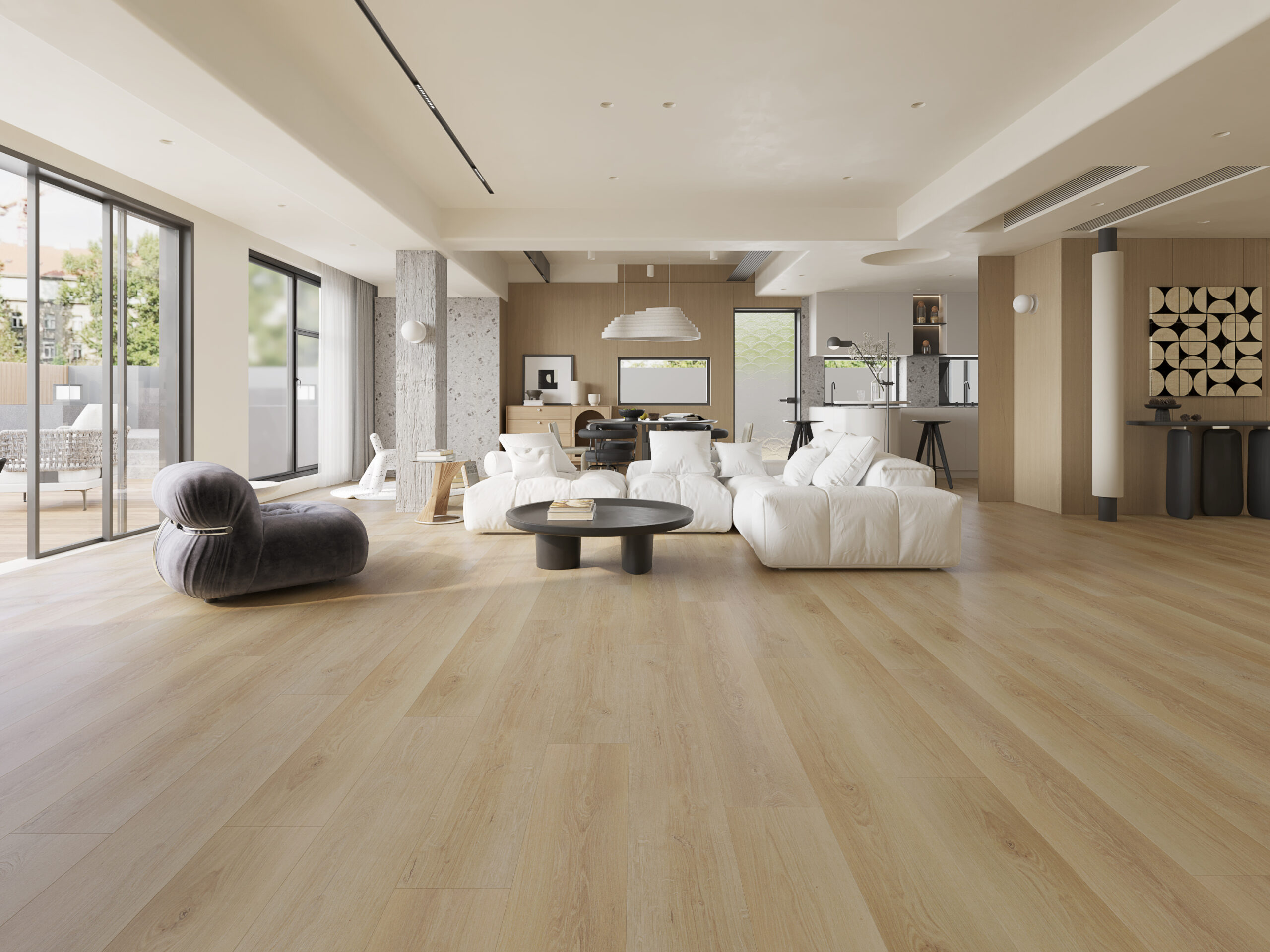
Carpet, hardwood, and vinyl are the three flooring categories that show up most often in Ontario homes, and the question of which to use in which room comes up in nearly every consultation. The honest answer is that all three have rooms where they excel and rooms where they’re the wrong choice, and the best result usually comes from using a coordinated mix rather than insisting on a single material throughout. Choosing by room rather than picking one category for the whole house is the approach that produces homes that work for the way people actually live in them.
This guide walks through how the three categories compare across the dimensions that matter — cost, lifespan, comfort, maintenance, and where each fits best — and lays out the combinations that work for typical Ontario homes.
Table of Contents
- Why Different Rooms Call for Different Flooring
- How Carpet Compares Across Different Rooms
- How Hardwood Compares Across Different Rooms
- How Vinyl Compares Across Different Rooms
- Comparing Cost Across the Three
- Comparing Lifespan Across the Three
- Comparing Comfort and Feel
- Comparing Maintenance Across the Three
- Common Combinations in Ontario Homes
- A Practical Way to Choose Across the Home
- Related Guides
- Want Help Planning Flooring Across Your Whole Home?
- Frequently Asked Questions
Why Different Rooms Call for Different Flooring
Different rooms have genuinely different requirements, and matching the material to the room’s actual demands produces much better outcomes than picking one product for visual consistency throughout the home. A bedroom benefits from softness underfoot and acoustic dampening that carpet provides naturally. A kitchen benefits from moisture tolerance and easy cleaning that hardwood doesn’t deliver as well as vinyl or tile. A formal living room benefits from the visual character and resale value that real hardwood contributes. A basement benefits from moisture-tolerant materials that solid hardwood can’t deliver.
Trying to force a single material into every room creates compromise in most of them. Hardwood in a wet kitchen accepts moisture damage. Carpet in a high-traffic kitchen wears prematurely and shows stains. Vinyl in a formal living room produces a visual feel that doesn’t match the room’s intent. The room-by-room approach treats each space as its own design problem with its own optimal solution.
How Carpet Compares Across Different Rooms
Carpet excels in bedrooms, family rooms, finished basements (with appropriate underlayment), and stairs where comfort and acoustic dampening matter. It’s the warmest underfoot of the three materials, the quietest acoustically, the safest for falls, and the most forgiving of imperfect subfloors. It’s also the easiest material to install over uneven surfaces and the most cost-effective per square foot for typical residential applications.
Carpet doesn’t belong in kitchens, bathrooms, entryways, or any high-moisture or high-traffic transit area. It absorbs spills and stains, holds onto pet accidents, and wears visibly in traffic patterns. Carpet in inappropriate rooms is one of the more common Ontario flooring mistakes and usually leads to early replacement.
How Hardwood Compares Across Different Rooms
Hardwood excels in main-floor public rooms — living rooms, dining rooms, hallways, and entryways — where its visual character, longevity, and resale impact pay off daily. It works well in bedrooms when the design direction calls for it, and it can work in kitchens with appropriate finish and discipline about water cleanup. Engineered hardwood extends the category’s range to include basements and condos with concrete subfloors, where solid hardwood doesn’t fit.
Hardwood doesn’t belong in bathrooms, laundry rooms, or any space with persistent moisture exposure. It also struggles in heavy pet households where scratches and accidents are inevitable, unless the homeowner accepts the appearance changes that come with time. The premium hardwood places — formal entries, dining rooms, living rooms — are where the cost-per-year-of-use math works out best.
How Vinyl Compares Across Different Rooms
Vinyl plank works almost everywhere. Modern rigid-core constructions handle moisture, traffic, and the broad range of household conditions that residential flooring faces. It’s the only material in this comparison that works in basements (with appropriate subfloor), bathrooms, kitchens, mudrooms, and main-floor public rooms. The visual variety — including realistic wood-look and stone-look options — covers most aesthetic directions.
Vinyl’s limits are aesthetic rather than functional. It doesn’t look exactly like real hardwood at close inspection, and the visual difference matters in formal rooms where the material’s character is part of the design. It also lacks the resale-value contribution that real hardwood provides in mid-range and upper-range homes. For homes where every room needs the same material, vinyl is often the practical answer; for homes where some rooms warrant the real thing, hardwood-and-vinyl combinations work well.
Comparing Cost Across the Three
In Ontario, installed pricing in 2026 falls into recognizable ranges. Carpet runs $5 to more than $10 per square foot installed. Vinyl plank runs $6 to $14 per square foot installed. Hardwood runs $9 to $18 per square foot installed, with premium species or wide-plank constructions pushing higher. The cost ordering is consistent, but the per-square-foot price doesn’t tell the whole story because the materials have different lifespans and different downstream costs.
On a cost-per-year-of-use basis, the ordering can flip. Hardwood that lasts 30 years at $14 per square foot is $0.47 per year. Carpet replaced every 10 years at $9 per square foot is $0.90 per year. Vinyl plank at $10 per square foot lasting 20 years is $0.50 per year. The headline cheapest can be the lifetime most expensive once the replacement cycles are accounted for. However, premium carpet and vinyl options increase the time between replacement cycles. For example, a 100% wool carpet can last 30-plus years before needing replacement.
Comparing Lifespan Across the Three
Solid hardwood lasts the longest by a wide margin — 30 to 80 years with multiple refinishings extending its life across generations. Engineered hardwood lasts 20 to 50 years with one or two refinishings possible on premium constructions. Vinyl plank lasts 15 to 25 years for quality products; entry-level vinyl is shorter. Carpet lasts 8 to 15 years for quality products in normal household use; high-traffic carpets and lower-quality products are shorter.
These ranges assume appropriate use and reasonable care. Premature replacement of any of these materials usually traces to wrong-product-for-the-room mistakes or installation problems rather than to the material itself failing. Choosing the right material for the room and installing it correctly is what gets actual use closer to the upper end of the lifespan range.
Comparing Comfort and Feel
Carpet wins decisively on comfort and feel. It’s the warmest underfoot, the softest for standing or sitting on the floor, the quietest acoustically, and the safest for falls. For rooms where comfort matters more than other priorities — bedrooms especially — carpet’s advantages are difficult for hard surfaces to match.
Hardwood and vinyl are similar to each other on comfort, with both feeling firm underfoot and producing more sound on impact than carpet. Hardwood feels slightly warmer because of its lower thermal conductivity; vinyl conducts slightly more cold from a slab subfloor. Neither is uncomfortable in normal residential use, but neither matches carpet’s plush feel in spaces where that matters.
Comparing Maintenance Across the Three
Vinyl is the lowest-maintenance of the three. Routine sweeping and occasional damp mopping handle nearly everything, and the material tolerates moisture, pets, and household accidents without showing damage in most cases. Hardwood requires more careful maintenance — sweeping and dry mopping for routine care, periodic re-coating to refresh the finish, and refinishing every 10 to 20 years to address accumulated wear. Carpet requires regular vacuuming, professional deep cleaning every 12 to 18 months, and prompt spot treatment for spills.
The maintenance differences matter most for households whose lifestyle doesn’t accommodate the higher-maintenance materials. Homes with active kids and pets often benefit from vinyl’s tolerance for daily abuse. Empty-nester households can usually accommodate hardwood’s maintenance requirements without difficulty. The right material partly depends on the household’s actual willingness to maintain it.
Common Combinations in Ontario Homes
Several material combinations show up regularly in well-planned Ontario homes. Hardwood on the main floor public rooms with carpet upstairs in bedrooms is a classic combination that puts each material where it works best. Hardwood throughout with tile in wet areas (bathrooms, laundry) is common in homes that want consistency on the main floor. Vinyl plank in basement and high-moisture areas with hardwood and carpet elsewhere balances cost and appropriateness. Vinyl throughout works in homes that want a single material’s consistency at lower cost than hardwood.
The right combination depends on the home’s size, the household’s lifestyle, and the budget. Working through the combination during the planning phase — rather than picking each room’s flooring independently — usually produces more coherent results.
A Practical Way to Choose Across the Home
The practical approach starts with the room-by-room needs analysis: what does this specific room need its floor to do? Once each room’s needs are clear, the material choices fall into place quickly. Bedrooms point to carpet unless allergies or specific preferences argue otherwise. Wet rooms point to tile or vinyl. Main-floor public rooms support hardwood when budget allows or quality vinyl plank when it doesn’t. Basements need moisture-tolerant materials. Stairs need products that wear well in concentrated traffic.
Our consultants work through this room-by-room analysis on every whole-home consultation. The systematic approach produces better outcomes than picking flooring by visual preference alone, and it tends to result in homes where every room feels right for the way it’s actually used.
Related Guides
A few other guides connected to this topic:
- How to Choose the Right Carpet for Your Home in Ontario (Complete Guide) — The complete carpet pillar.
- Carpet Fibre Comparison: Nylon vs Polyester vs Wool vs Olefin — Direct comparison with related materials.
- How Long Does Carpet Last? Lifespan, Warranties & When to Replace — Lifespan, replacement, and longevity details.
- Steam Cleaning vs Dry Cleaning Carpet (Which Is Better?) — Direct comparison with related materials.
- Floor, Carpet & Rug Care Guide: How to Clean and Protect Every Surface in Your Home — The complete cleaning and maintenance pillar.
Want Help Planning Flooring Across Your Whole Home?
Still doing your research? When you’re ready to see the options in person, visit any of our 17 Ontario showrooms to compare them with one of our consultants — or book an in-home appointment if you’d prefer we come to you.
Frequently Asked Questions
Should I use the same flooring throughout my home?
Visual continuity is appealing, but most homes benefit from different flooring in different rooms based on function. A common approach is one flooring across main living spaces and different choices in bathrooms, bedrooms, and basements.
Which is the most versatile flooring?
Vinyl plank is typically the most versatile—it works well in nearly every room except where carpet’s comfort or hardwood’s design impact is preferred.
Is hardwood worth the extra cost?
In main living areas where the floor is visible all day and adds resale value, hardwood typically justifies the upfront cost over its very long lifespan.
Can I mix carpet and hardwood?
Yes—it is one of the most common Ontario combinations. Plan transitions carefully (typically at room thresholds) for the cleanest look.