
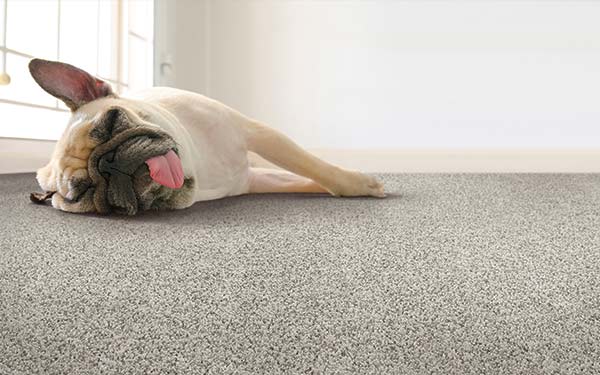
Pet accidents are part of life with cats and dogs. Whether the pet is house-training, aging, sick, or just had an unexpected moment, knowing how to address stains and odours quickly determines whether the issue becomes a permanent problem or fades into the kind of minor incident every pet household experiences occasionally.
Different surfaces and different types of accidents need different approaches. The right approach catches the issue while it’s still recoverable; the wrong approach lets a minor incident become permanent damage.
Table of Contents
- Why Pet Accidents Are Different From Other Spills
- How Quickly to Respond
- Treating Pet Stains on Carpet
- When the Underpad and Subfloor Are Affected
- Treating Pet Stains on Hardwood
- Treating Pet Stains on Vinyl, Laminate, and Tile
- Treating Pet Stains on Area Rugs
- Eliminating Persistent Odour
- Preventing Permanent Damage
- When to Replace Rather Than Clean
- A Practical Approach to Pet Accidents
- Bringing It All Together
- Related Guides
- Dealing With Pet Stains and Odours?
- Frequently Asked Questions
Why Pet Accidents Are Different From Other Spills
Pet urine in particular has properties that make it harder to clean than typical spills. It contains uric acid that crystallizes into fibres or surfaces and continues to release odour even after surface cleaning. It typically penetrates deeper than water-based spills because of its volume and composition. Bacteria from urine continue producing odour over time even after the visible accident is cleaned. And pets often return to scent-marked spots, which means an incompletely cleaned accident invites repeat incidents.
Each of these factors requires specific cleaning approaches that go beyond standard spill response. Treating pet accidents like regular spills produces the persistent odour and staining problems pet households are trying to avoid.
How Quickly to Respond
Speed matters more for pet accidents than for almost any other spill. Within the first hour, full clean-up is possible without lasting odour or stain. Within the first twenty-four hours, most stains and odours can still be addressed, though more thoroughly than fresh accidents require. Beyond twenty-four hours, urine has crystallized into fibres or surfaces, and specialized cleaners are needed; some odour or staining may persist despite best efforts. Beyond a week, deep treatment is often required, and permanent staining or odour becomes possible.
The first hour is the highest-leverage window in pet stain response, and it’s worth treating accidents seriously when they happen rather than letting them sit while you finish what you were doing.
Pet accidents beyond DIY? Book in-home carpet steam cleaning — and ask about green rug washing for affected area rugs.
Treating Pet Stains on Carpet
Carpet pet accidents need a specific three-step approach.
Step 1: Blot Immediately
Use clean white cloths or paper towels to absorb as much of the accident as possible. Press firmly without rubbing—rubbing spreads the accident and pushes it deeper into fibres. Replace cloths as they become saturated. Aim to remove as much liquid as possible before applying any cleaning solution.
Step 2: Apply Enzyme Cleaner
Pet accidents need enzyme-based cleaners specifically. Standard household cleaners do not break down uric acid; enzyme cleaners do. Apply generously to fully saturate the affected area—including some area beyond the visible stain, since urine often spreads underneath. Allow the enzyme to work for the time specified on the product (typically 10 to 30 minutes).
Step 3: Blot Again and Allow to Dry
After the enzyme has worked, blot the area dry with clean cloths. Cover with a heavy book or weight for several hours to draw moisture upward into the cloths. Allow to fully air dry before normal use of the area. Do not vacuum until completely dry.
When the Underpad and Subfloor Are Affected
Older accidents have often soaked through carpet to the underpad and sometimes to the subfloor underneath. Surface cleaning won’t address odour from saturated underpad—the smell continues even after the carpet appears clean to the eye. Confirming whether the underpad is affected typically requires lifting the carpet, which should be done by a professional if you’re not comfortable with the process.
Affected underpad usually needs replacement; cleaning rarely restores it fully. Affected subfloor needs to be sealed with a stain-blocking primer to prevent odour from continuing to release. For chronic or severe pet odour issues, this deeper investigation is often necessary even when surface cleaning seems to have worked.
Treating Pet Stains on Hardwood
Hardwood pet accidents have specific challenges that depend on how quickly they’re addressed. Surface stains caught immediately can be blotted and cleaned with hardwood-safe cleaner, and most fresh accidents leave no lasting damage if addressed quickly. Penetrated stains—urine that has soaked into the wood and shows as dark spots—often require sanding and refinishing of the affected boards because the discoloration goes below the finish into the wood itself. Severe damage to boards beyond what refinishing can address typically requires board replacement.
The Hardwood Floor Maintenance Guide covers daily care that protects hardwood from accidents in the first place.
Treating Pet Stains on Vinyl, Laminate, and Tile
Hard surface flooring is generally more forgiving of pet accidents than carpet or hardwood. Vinyl plank handles surface accidents that clean up easily, though standing accidents at seams should be addressed quickly to prevent moisture infiltration. Laminate handles surface accidents but standing accidents need prompt attention because moisture at edges causes swelling. Tile cleans with appropriate cleaner, though grout may need additional attention—enzyme cleaner applied to grout addresses odour that surface cleaning may miss.
All hard surfaces benefit from prompt attention but rarely sustain permanent damage from individual accidents addressed quickly.
Treating Pet Stains on Area Rugs
Area rugs respond well to specialized treatment, and they have an advantage that wall-to-wall carpet doesn’t: they can be moved. Smaller rugs can be taken to a professional rug cleaning facility for in-plant washing—a green, no-harsh-chemical power-wash that is safe for wool and natural fibres—if accidents are recurring. Larger rugs benefit from blotting, applying enzyme cleaner, allowing it to work, and then having professional cleaning done in place.
Wool and natural fibre rugs need wool-safe enzyme cleaners specifically. Standard pet cleaners can damage wool. For valuable rugs with pet damage, professional rug washing typically produces dramatically better results than home treatment. The Area Rug Cleaning & Washing Guide covers professional rug cleaning options in more depth.
Eliminating Persistent Odour
Some pet odour issues persist even after treatment, and several escalation steps can help. Use a UV blacklight to identify all affected areas—urine glows under UV, and many homeowners discover affected areas they didn’t know existed. Apply enzyme cleaner to all identified spots, allowing the full recommended time to work. Consider professional cleaning by a pet-stain specialist for severe cases.
If carpet underpad is involved, replacement may be necessary. If the subfloor is involved, sealing with a stain-blocking primer addresses odour at the source. For severe cases with whole-room odour, ozone treatment by a professional remediation service can address airborne contamination that other methods can’t reach.
Preventing Permanent Damage
Several habits protect flooring from pet accidents in the first place. Use moisture-barrier underpad in pet households—essential for any new carpet installation in homes with pets. Address accidents immediately because most damage happens after time, not during the accident itself. Use enzyme cleaners specifically formulated for pet accidents rather than standard household cleaners. Schedule professional carpet cleaning every six to twelve months in active pet households.
These steps significantly reduce the long-term flooring impact of pet ownership and make individual accidents much less consequential when they do happen.
When to Replace Rather Than Clean
Some pet damage is beyond cleaning. Carpet with widespread underpad damage and persistent odour despite enzyme treatment may need replacement. Hardwood with deeply penetrated urine stains across multiple boards typically warrants replacement of those boards rather than continued attempts at restoration. Rugs with damage spread throughout rather than in isolated spots often aren’t worth restoring. Subfloor with persistent contamination that can’t be sealed may need replacement.
In these cases, replacement with proper moisture-management measures for new flooring often produces better outcomes than continued attempts to clean what’s accumulated past the point of restoration.
A Practical Approach to Pet Accidents
Keep enzyme cleaner on hand for immediate response. Address accidents within the first hour where possible. Use UV blacklight to find unknown contamination. Schedule professional cleaning at appropriate intervals for pet households. Consider whole-system improvements like moisture-barrier pad and sealed subfloor at the next flooring renovation.
Following this approach keeps homes with pets looking and smelling clean despite the inevitable accidents.
Bringing It All Together
Pet stain and odour issues respond well to the right approach—enzyme cleaners, prompt response, professional help when home methods fall short. The wrong approach—standard cleaners, delayed response, masking products that don’t address the underlying issue—can make problems worse rather than solving them.
Knowing the difference is most of what separates pet households that maintain clean homes from ones that struggle with persistent odour and staining.
Related Guides
A few other guides connected to this topic:
- Floor, Carpet & Rug Care Guide: How to Clean and Protect Every Surface in Your Home — The complete cleaning and maintenance pillar.
- Steam Cleaning vs Dry Cleaning Carpet (Which Is Better?) — Direct comparison with related materials.
- Carpet Cleaning Guide: How Often to Clean Your Carpet & When to Call a Pro — Closely related topic in this category.
- Best Carpet for Pets: Stain Resistance, Durability & Easy Cleaning — Closely related topic in this category.
- How to Choose the Right Carpet for Your Home in Ontario (Complete Guide) — The complete carpet pillar.
- How Long Does Carpet Last? Lifespan, Warranties & When to Replace — Lifespan, replacement, and longevity details.
Dealing With Pet Stains and Odours?
When your carpet needs more than routine care, book in-home carpet steam cleaning and our technicians handle the deep clean from start to finish.
Frequently Asked Questions
How do I get pet urine smell out of carpet?
Use enzyme-based cleaners specifically formulated for pet accidents, not standard household cleaners. Apply generously to fully saturate affected area, allow to work for full recommended time, then blot dry.
Can pet urine damage hardwood floors?
Yes. Urine that soaks into wood causes dark stains that often require sanding and refinishing. Surface accidents addressed quickly typically leave no lasting damage.
Why does my carpet still smell after cleaning?
Often because the underpad has absorbed urine. Surface cleaning does not address contamination in the pad. Pad replacement may be necessary.
Are enzyme cleaners safe for all surfaces?
Enzyme cleaners are safe for most carpets, hard surfaces, and synthetic rugs. For wool rugs and natural fibre rugs, use only wool-safe enzyme cleaners specifically formulated for those materials.