
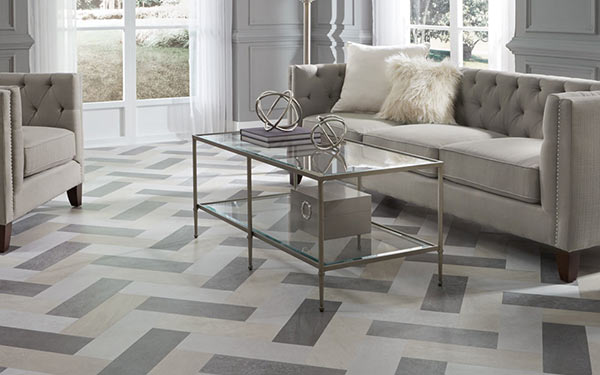
Tile, vinyl plank, and hardwood are the three flooring categories that appear most often in modern Ontario homes outside of bedrooms (where carpet typically dominates). The choice between them depends entirely on the room — each has spaces where it excels and spaces where it’s the wrong answer, and the best whole-home result usually comes from using a coordinated mix, not a single material throughout.
This guide walks through how the three categories compare across cost, lifespan, comfort, and maintenance, then provides the room-by-room thinking that produces well-planned flooring projects.
The Short Answer
Tile in the wet rooms, hardwood in the main-floor public rooms, vinyl plank everywhere the budget or the basement says so. That combination is the default for a reason, and most whole-home plans are a variation on it.
Where it goes wrong is almost never the material and almost always the room. Hardwood in a kitchen that sees real water is replaced at 15 years instead of 50. The choice that matters is per room, and the mistake that matters is planning the rooms separately and meeting at the transitions.
How These Three Flooring Types Differ
Tile is a rigid material laid in pieces, stuck down with mortar and jointed with grout, which is why it cannot move independently of what is under it. It’s essentially impervious to moisture, extremely durable, and unforgiving on substrate movement or installation errors. Vinyl plank is a synthetic floating-floor system with a printed wood-look surface and a clear wear layer on top. It handles moisture exceptionally well and installs over many subfloor conditions. Hardwood is real wood — either solid pieces nailed down or engineered with a real wood wear layer over a plywood substrate — installed in long planks.
The construction differences drive most of the practical differences that follow. Tile excels at moisture and durability; vinyl excels at moisture and versatility; hardwood excels at authenticity and resale value. Each category has strong rooms and weak rooms, and the choice for any specific space depends on which characteristics matter most.
Best Rooms for Tile
Tile excels in bathrooms, kitchens, mudrooms, entryways, and laundry rooms where moisture tolerance is the primary consideration. The material handles water, traffic, dropped items, salt, dirt, and the daily wear of high-use rooms better than alternatives. Tile is also a strong choice in homes with in-floor heating because the thermal mass distributes heat evenly. Some modern open-concept designs use tile throughout the main floor for visual consistency and easy maintenance.
Tile is less appropriate in bedrooms, family rooms, and other comfort-priority spaces. The cold and hard characteristics work against the room’s purpose unless in-floor heating addresses the comfort issue. When tile is used in these rooms, it’s usually because the design direction specifically calls for it and the heating decision is made deliberately.
Best Rooms for Vinyl Plank
Vinyl plank works almost everywhere. The category’s range covers basements, bathrooms, kitchens, mudrooms, main-floor public rooms, bedrooms, and home offices. Modern rigid-core constructions (SPC, WPC) handle moisture, traffic, and the broad range of household conditions that residential flooring faces. The visual variety includes realistic wood-look and stone-look options that cover most aesthetic directions.
Vinyl plank is the practical default in homes that want consistency across the floor plan at moderate cost. It’s also the right answer in basements where moisture management matters, in households with active pets or kids where wear resistance matters, and in homes that prioritize easy maintenance. Vinyl plank’s limits are aesthetic, not functional — at close inspection it’s identifiable as not real wood, which matters in formal rooms where the material’s character is part of the design.
Best Rooms for Hardwood
Hardwood excels in main-floor public rooms — living rooms, dining rooms, hallways, and entryways — where its visual character, longevity, and resale impact pay off daily. It works well in bedrooms when the design direction calls for it. Engineered hardwood extends the category’s range to include basements and condos with concrete subfloors. Hardwood in main-floor rooms also adds resale value in Ontario homes in a way that vinyl plank doesn’t.
Hardwood doesn’t belong in bathrooms, laundry rooms, or any space with persistent moisture exposure. It struggles in heavy pet households where scratches are inevitable. The premium hardwood places — formal entries, dining rooms, living rooms — are where the cost-per-year-of-use math works out best, and where the resale value premium is most meaningful.
The Three Compared
| Tile | Vinyl plank | Hardwood | |
|---|---|---|---|
| Installed cost per sq ft | $10 to $25 | $5 to $12 | $9 to $18 |
| Expected life | 50 to 100 years | 15 to 25 years | 50 to 100 years with refinishing |
| Moisture | Impervious | Excellent | The weakness |
| Underfoot | Hardest and coldest | Firm, warm | Slight give, warm |
| Maintenance | Easy, but grout needs sealing | Lowest of the three | Recoat, and refinish every 10 to 20 years |
| Repair | Tile by tile | Plank replacement | Sand the whole floor |
The row that surprises people is repair. Tile is the only one of the three that can be fixed a square at a time, and it is also the only one where the fix depends on having kept a box from the original lot. Hardwood is the only one that can be made new again without being removed.
What Each One Costs Over Its Life
In Ontario in 2026, installed pricing falls into recognizable ranges. Vinyl plank runs $6 to $14 per square foot installed. Hardwood runs $9 to $18 per square foot installed for typical species, with premium species or wide-plank constructions pushing higher. Tile runs $10 to $25 per square foot installed depending on the tile category and installation complexity. The categories overlap significantly at their extremes — premium vinyl can cost more than entry-level hardwood, and elaborate tile installations can cost more than premium hardwood.
On a cost-per-year-of-use basis, the ordering shifts. Solid hardwood at 50+ years and tile at 50+ years both produce favourable per-year costs despite higher upfront prices. Vinyl plank at 15 to 25 years requires replacement multiple times during the period covered by a single hardwood or tile installation. The honest budget comparison includes the replacement-cycle math, not just the per-square-foot installation price.
Why Floors Actually Get Replaced Early
Tile is the longest-lasting category, and on a sound substrate it will outlast the people who chose it. Solid hardwood lasts 50 to 100 years with multiple refinishings. Engineered hardwood lasts 25 to 50 years. Vinyl plank lasts 15 to 25 years for quality products. These ranges assume appropriate installation and reasonable care.
Premature replacement of any of these materials usually traces to wrong-product-for-the-room mistakes, not to the material failing. Tile in a bathroom rarely needs replacement. Hardwood in a moisture-exposed kitchen often needs replacement at 15 years instead of 50. Vinyl plank in a sunny west-facing room can fade faster than rated. Early replacement is almost always a product that was right in general and wrong for that particular room.
How Each One Feels to Live On
Hardwood is the most comfortable underfoot of the three. The material has slight give, conducts heat at a moderate rate (warmer than tile, similar to vinyl), and produces footsteps that sound and feel natural. Vinyl plank is similar in feel — slightly firmer than hardwood and slightly cooler — but still comfortable for typical residential use. Tile is the coldest and hardest underfoot, which matters in spaces where standing time is significant or comfort is a priority. In-floor heating substantially improves the tile experience.
The comfort differences are most noticeable in early morning bathroom visits in winter (tile feels cold), in extended kitchen standing time (tile is hardest on feet), and in active play areas (hardwood and vinyl are more forgiving than tile for falls). For rooms where these factors matter, the comfort characteristic should be weighted in the choice, not treated as secondary to aesthetics.
Three materials, one house, and the transitions between them. Book an in-store appointment with a floor plan and we will work through it room by room instead of sample by sample.
What Each One Asks of You
Vinyl plank is the lowest-maintenance of the three. Routine sweeping and occasional damp mopping handle nearly everything, and the material tolerates moisture, pets, and household accidents without showing damage in most cases. Tile is similar — surfaces clean easily, though grout requires periodic sealing and occasional deeper cleaning. Hardwood requires more careful maintenance — sweeping and dry mopping for routine care, periodic re-coating, and refinishing every 10 to 20 years to address accumulated wear.
The maintenance differences matter most for households whose lifestyle doesn’t accommodate higher-maintenance materials. Homes with active kids and pets often benefit from vinyl’s tolerance for daily abuse. Households that maintain hardwood properly find the periodic refinishing is well worth the effort given the floor’s longevity. Tile’s grout maintenance is the main ongoing item, manageable with appropriate sealing.
Common Whole-Home Flooring Combinations
Several material combinations show up regularly in well-planned Ontario homes. Hardwood on the main-floor public rooms, carpet upstairs in bedrooms, tile in bathrooms, and vinyl plank in basements is a classic combination that puts each material where it works best. Vinyl plank throughout with tile in wet areas works in homes that want a single material’s consistency across most of the floor plan. Hardwood throughout the main floor with tile in wet areas is common in mid-range to upper-range homes.
The right combination depends on the home’s size, the household’s lifestyle, and the budget. Working through the combination during the planning phase, instead of picking each room’s flooring independently — usually produces more coherent results. Our consultants approach whole-home consultations with this combinatorial thinking, mapping materials to rooms in a coordinated plan.
| Combination | Suits | Why it works |
|---|---|---|
| Hardwood main floor, carpet up, tile in wet rooms, vinyl in the basement | Most family homes | Each material in the room it is actually best at |
| Vinyl plank throughout, tile in wet rooms | Rentals, budget-led builds, allergy-conscious homes | One look across the plan, minimal maintenance |
| Hardwood throughout the main floor, tile in wet rooms | Mid to upper-range homes | Strongest resale profile; fewest transitions |
How to Choose Among the Three
The choice between tile, vinyl plank, and hardwood for any specific room comes down to four factors: the room’s conditions (moisture, traffic, temperature), the household’s priorities (comfort, durability, design, resale value), the budget (both upfront and lifetime), and the design direction (formal vs. casual, modern vs. traditional). Working through these systematically for each room produces the right answer more reliably than picking by visual preference alone.
Bathrooms point to tile. Kitchens can go any of the three depending on priorities, with tile being most common in traditional designs and vinyl plank gaining in modern ones. Main-floor public rooms in homes that may be sold within ten years often warrant hardwood for the resale impact. Basements point to vinyl plank or tile. Bedrooms typically use carpet but can use hardwood, engineered hardwood, or vinyl when the design calls for hard surface.
Planning It Room by Room
- Start with the rooms that have conditions, not preferences — bathrooms, laundry, entry, basement. Those choose themselves and they anchor everything else.
- Do the main-floor public rooms next, where the decision is design and resale rather than performance.
- Leave bedrooms until last. They are the most forgiving rooms in the house and the easiest to change later.
- Coordinate tone across materials, not within them. A hardwood and a wood-look vinyl in adjoining rooms have to agree; two hardwoods in the same room do not arise.
- Keep grout colour consistent across every tiled room on the same floor, even where the tile differs.
- Plan transitions where the materials meet before ordering, not on installation day.
The single most common planning mistake is choosing each room independently and discovering the transitions afterwards. Four materials meeting in a hallway is not a design, and it is very difficult to fix once the floors are down. How to Choose the Right Flooring for Your Home in Ontario works through the whole-house decision, and Tile Flooring Guide for Ontario Homes handles the tile half in detail.
Related Guides
A few other guides connected to this topic:
- Tile Flooring Guide for Ontario Homes: Porcelain, Ceramic, Stone & Where Each Works — The complete tile pillar.
- Porcelain vs Ceramic Tile: What Is the Real Difference? — Direct comparison with related materials.
- Tile Installation: What to Expect (Subfloor, Layout, Curing, Sealing) — Subfloor and underlayment considerations.
- Carpet vs Hardwood vs Vinyl: Choosing the Right Flooring by Room — Direct comparison with related materials.
Want Help Planning Flooring Across Your Whole Home?
The best way to choose what’s right for your home is to see the options side by side. Book an in-store appointment at one of our 17 Ontario showrooms and one of our consultants will walk you through what fits your space, your needs, and your budget – or request an in-home visit if that’s easier.
Frequently Asked Questions
Which is better: tile, vinyl, or hardwood?
Each is best in different rooms. Tile excels in wet areas. Vinyl is most versatile and best in basements. Hardwood is best in main living areas. Most homes use a combination.
Can I use the same flooring throughout my home?
It is possible, but most homes benefit from different flooring in different rooms based on function. A common approach is one flooring across main living spaces and different choices in wet rooms and basements.
Which lasts the longest: tile, vinyl, or hardwood?
Tile and solid hardwood are the longest-lasting (30 to 100+ years). Engineered hardwood lasts 25 to 40 years. Vinyl plank lasts 15 to 25 years.
Is tile worth the higher cost?
In rooms where moisture matters and longevity is a priority (bathrooms, mudrooms, kitchens, basements), tile typically delivers the best long-term value despite higher upfront cost.