
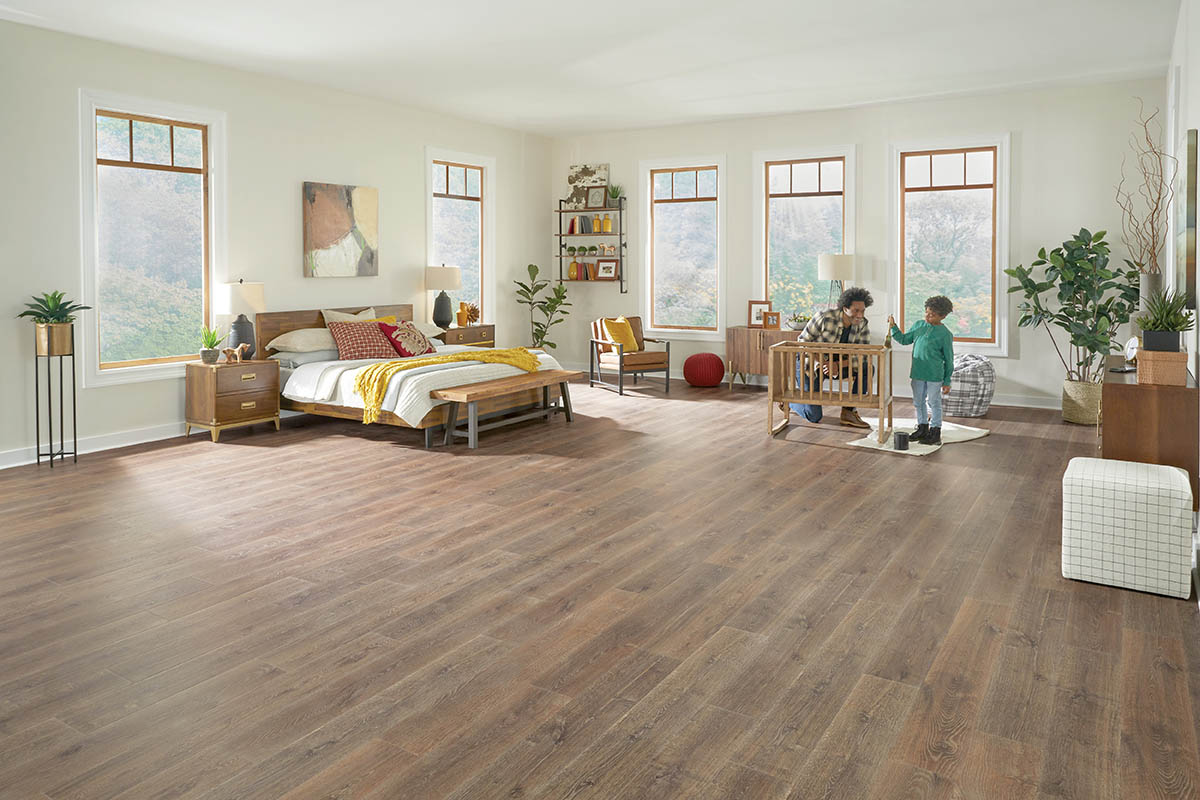
Vinyl flooring has a complicated reputation for indoor air quality, and the concern is legitimate for older products and bargain imports but largely outdated for mainstream modern vinyl from reputable manufacturers. The category has responded to consumer concerns with substantive product improvements over the past decade, and current premium vinyl meets strict emission standards that older vinyl didn’t.
This guide walks through what the air quality concerns actually are, how modern vinyl differs from products of fifteen years ago, what specifications to look for when buying, and how to evaluate the question for your specific household.
The Short Answer
Not in any meaningful sense, if it is certified. Look for FloorScore or GreenGuard Gold, buy phthalate-free from a reputable manufacturer, and ventilate well for the first few weeks. That covers almost all of what this question requires.
The concern was legitimate for older vinyl and remains legitimate for unverified imports. It is largely outdated for mainstream modern product, and emissions from a certified floor fall roughly 90 percent within the first month.
Why Vinyl Got the Reputation, and What Changed
Older vinyl flooring contained phthalates (chemical plasticizers that made the vinyl flexible) and emitted volatile organic compounds (VOCs) from manufacturing residues and adhesives. Both raised legitimate concerns about long-term indoor air quality, particularly in homes with sensitive occupants — children, pregnant women, people with chemical sensitivities. The concerns were documented enough that the vinyl industry, regulatory bodies, and consumer advocates all pushed for change over the past two decades.
Beyond product chemistry, the installation process for some older vinyl involved adhesives with their own VOC emissions, and the off-gassing period after installation could affect indoor air quality for weeks. Cumulatively, vinyl gained a reputation as a flooring category to be cautious about, even though the actual risk varied significantly by product and installation.
Mainstream vinyl from reputable manufacturers has changed substantially. Most premium SPC and WPC products are now phthalate-free, using alternative plasticizers (or rigid core constructions that don’t need plasticizers at all). VOC emissions from quality vinyl now meet the most stringent residential standards. Installation adhesives (when used) have improved similarly. Manufacturer transparency about chemistry has improved — third-party certifications now verify what manufacturers claim.
The improvement isn’t universal. Off-brand vinyl from unverified manufacturers, cheap imports, and budget products from major retailers may still have legacy chemistry concerns. The differentiation is real, and buying from reputable manufacturers with appropriate certifications eliminates most of the air quality concerns that previously characterized the category.
The Certifications Worth Checking
| Certification | Run by | What it verifies |
|---|---|---|
| FloorScore | Independent, to California standards | VOC emissions below California’s limits — the most stringent in North America, and effectively the industry baseline |
| GreenGuard Gold | UL | Low emissions, third-party verified |
| CRI Green Label Plus | Carpet and Rug Institute | Originally a carpet certification, increasingly applied to other categories |
Beyond the certifications, the manufacturer’s own documentation should address phthalate content directly — phthalate-free is what you want — and publish VOC emissions. Reputable manufacturers do publish this. A product that does not disclose it is telling you something, and buying from a showroom with established manufacturer relationships, not an online unknown, is the simplest way to avoid undisclosed chemistry altogether.
How Long the Off-Gassing Actually Lasts
Even compliant vinyl flooring releases some VOC emissions during the first weeks after installation, primarily from manufacturing residues and any adhesives used. The emissions decrease rapidly — typically by 90 percent within the first month — and continue to decrease toward background levels over the following months. By six months after installation, well-chosen modern vinyl typically emits at levels indistinguishable from other building materials.
Ventilating well during the first weeks after installation accelerates the off-gassing. Opening windows when weather allows, running HVAC fans, and avoiding sealing the home tightly during this period all help VOCs dissipate. For sensitive households (newborns, chemical-sensitive individuals), arranging for the installation to happen well before move-in, or installing during seasons when ventilation is easy, can address most of the temporary emission concerns.
Managing Air Quality During Installation
Four steps, none of them onerous:
- Choose a certified product — FloorScore or GreenGuard Gold, tested for emissions, not described as low-emission.
- Use low-VOC adhesive where the installation is glue-down.
- Ventilate during and after — open windows, run fans, keep the HVAC circulating.
- Schedule for temperate weather, so the windows can actually stay open.
For a household with a sensitive occupant, four more are worth the effort:
- Vacate during installation where that is practical.
- Do not move in immediately — a few weeks of off-gassing before regular occupancy cuts exposure substantially.
- Run HEPA purifiers through the post-installation period.
- Install well before a move-in date, not up against one. The easiest of these to arrange and the one most often left too late.
If air quality is the deciding factor, the certifications are worth reading side by side. Book an appointment and we will show you the documentation on what we carry.
Vinyl Against Other Floors
| Material | Emission profile | What to look for |
|---|---|---|
| Tile and natural stone | Lowest — inorganic materials | Nothing on the material itself; check the adhesive and grout |
| Certified vinyl | Low, once certified | FloorScore or GreenGuard Gold, phthalate-free |
| Engineered hardwood and laminate | Adhesives in the construction can emit | Appropriate certification on the product |
| Carpet | Historically a concern, from adhesives and synthetic fibres | CRI Green Label Plus |
Where indoor air quality is the highest priority in the decision, tile and natural stone are the lowest-emission options available and it is not close. Where other factors carry more weight, certified vinyl from a reputable manufacturer does not present meaningful air quality risk for typical occupants in a typical home. Every flooring category has an emission profile; the useful question is whether a given product has been tested, not which category it belongs to.
Households That Warrant More Caution
Infants, people with severe chemical sensitivities and people with respiratory conditions warrant additional caution on any flooring category, not just this one. For those households:
- Certified products only, with emissions verified, not claimed.
- Full off-gassing period before sensitive occupants return to the space.
- Consider naturally inert materials — tile or natural stone — where the project supports them.
- Consult an environmental medicine specialist for severe sensitivities. This is past where a flooring retailer should be advising.
Four Things People Get Wrong
- That all vinyl carries harmful chemistry. Older vinyl did. Modern certified product from a reputable manufacturer does not.
- That the concern is permanent. Emissions fall roughly 90 percent in the first month and reach background levels within months.
- That vinyl is uniquely worse than the alternatives. Every category has an emission profile, and certified vinyl sits comparably to certified products elsewhere.
- That answering the question takes extensive research. Check for FloorScore or GreenGuard Gold, buy from a reputable manufacturer, ventilate properly. That covers most of it.
Our Honest Position
Mainstream modern vinyl, of the kind described throughout Vinyl Flooring Guide for Ontario Homes, is fine for typical households when basic precautions are followed, and the products we carry meet the relevant certifications. That is the whole answer for most people, and we would rather say it plainly than hedge it.
For households with genuine sensitivity needs, the answer is different and we will say that too — there are alternatives worth discussing, and we can provide the manufacturer documentation to support the decision, so nobody has to take our word for it. The category’s reputation traces to older products and to off-brand imports, not to what a reputable manufacturer is selling in 2026, and pretending otherwise would be as dishonest as pretending the original concerns were never real.
Related Guides
A few other guides connected to this topic:
- Vinyl Flooring Guide for Ontario Homes (LVT, LVP, Rigid Core & Sheet Vinyl) — The complete vinyl flooring pillar.
- Wear Layer Thickness Explained: What Mil Means for Vinyl Plank — what the mil figure does and does not tell you, and the range we actually carry.
- Vinyl vs Laminate vs Engineered Hardwood: Cost, Durability & Where Each Works Best — Direct comparison with related materials.
- Vinyl & Laminate Floor Cleaning Guide: How to Clean Floors Without Causing Damage — Closely related topic in this category.
- Vinyl vs Laminate Flooring: What’s the Difference and Which Should You Choose? — Direct comparison with related materials.
- Hardwood vs Engineered vs Vinyl Plank: Cost, Look & Long-Term Performance Compared — Direct comparison with related materials.
- Flooring Installation Services — Measuring, an itemized quote, and certified installation handled as part of your purchase.
- Why Alexanian — A century in the flooring trade, across 17 Ontario showrooms.
Concerned About Vinyl Flooring Indoor Air Quality?
The best way to choose what’s right for your home is to see the options side by side. Book an in-store appointment at one of our 17 Ontario showrooms and one of our consultants will walk you through what fits your space, your needs, and your budget – or request an in-home visit if that’s easier.
Frequently Asked Questions
Is vinyl flooring safe for kids?
FloorScore-certified, phthalate-free vinyl is considered safe for children’s living environments. Most modern residential vinyl meets these standards.
Does vinyl flooring off-gas?
Yes, particularly in the first 30 days after installation. Certified low-emission products have minimal long-term emissions.
What is FloorScore certification?
An independent certification confirming VOC emissions are below specified limits. Common on residential vinyl flooring.
Is vinyl plank flooring eco-friendly?
Modern formulations have improved significantly. Look for certified low-emission, phthalate-free products. Some vinyl uses recycled content—check product specifications.