
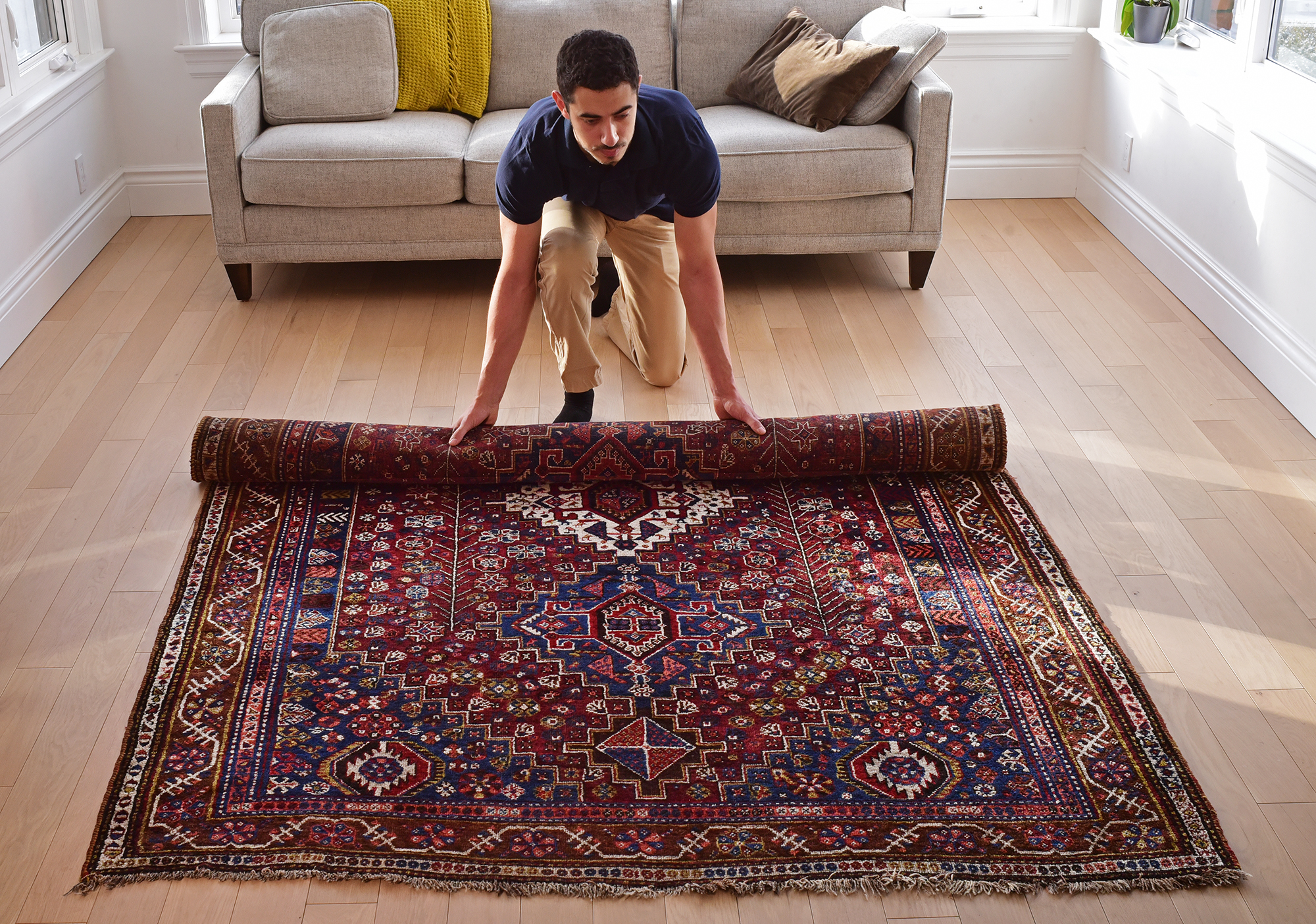
Area rugs need different cleaning than wall-to-wall carpet. Rugs are typically smaller, often more valuable per square foot, and frequently made of materials that home cleaning equipment was never designed to handle. The right cleaning approach extends rug life by years; the wrong approach can damage rugs in single sessions.
Knowing when home methods work and when professional cleaning is worth the investment is most of what separates rugs that age gracefully from rugs that wear out before their time.
The Short Answer
Vacuum a rug the way you vacuum the floor, deal with spills the day they happen, and send it out to be washed every one to three years depending on where it lives and what it is made of. High-traffic rugs sit at the short end of that range, formal rooms at the long end, and a pet household moves up a band regardless.
The part to understand is that a rug is the only floor covering in the house that can leave the house. That is not a convenience detail. A rug lifted off the floor can be dusted from the back, washed through and dried under controlled conditions, none of which is possible while it is lying on hardwood and the floor underneath has to stay dry.
So the real decision is rarely whether to clean the rug. It is whether the rug goes out or the technician comes in, and for wool, silk blends and anything hand-knotted or old, it should go out.
Why Rugs Are Different From Carpet
Four things separate a rug from the carpet running wall to wall in the next room, and each one changes how it should be cleaned.
- Value per square foot — usually higher, which raises the cost of getting it wrong
- Material — wool, silk and other natural fibres need specific handling; the general-purpose approach that suits synthetic broadloom will damage them
- It moves — which opens up washing methods that cannot be used on a fitted floor
- Edges and backing — fringes, bindings and backings take a kind of wear that wall-to-wall carpet never sees
How Dirt Builds Up Over Time
Rugs accumulate soil in patterns that aren’t always obvious. Surface debris—hair, dust, food crumbs—sits on top of fibres and vacuums easily. Embedded grit works into the fibre structure where standard vacuuming can’t reach it. Oils and residues build up from foot contact and absorbed spills. Pet dander and allergens accumulate in fibres over months. Each layer needs different cleaning approaches, and home methods reliably handle the surface layer while leaving the deeper accumulation in place.
A rug that looks acceptable is a rug whose surface layer is clean. That layer is the one home equipment reliably handles.
What You Can Do at Home
Three home methods do real work, and the third has quietly fallen out of use. Vacuum regularly, on both sides where the rug is reversible, to lift grit before it settles into the pile. Spot-clean spills with something appropriate to the fibre before they become stains. And take smaller rugs outside to beat and shake — the traditional method, and still the fastest way to release embedded grit that a vacuum head cannot pull up. Caring for area rugs at home goes through the routine in more detail.
Where home methods fall short is in deep extraction, oil and residue removal, pet odour elimination, and restoration of crushed fibres. Annual professional cleaning fills these gaps in ways home equipment was never designed to.
In-Plant Washing Versus On-Site Cleaning
This is the decision that matters most, and homeowners are least often offered it clearly.
On one rug the decision is already made. An Oriental rug should not be cleaned in your home. On-location methods cannot pull the abrasive soil out of the foundation, and they cannot dry the rug quickly enough to keep the warp and weft from taking permanent damage — with the floor underneath at risk for the length of the job. That is our position on it, not a preference between two good options.
| On-site cleaning | In-plant washing | |
|---|---|---|
| Where it happens | In your home, rug stays on the floor | At the plant, rug is collected or dropped off |
| Logistics | Fast, nothing leaves the house | Pick-up and drop-off from the home, or drop-off at any of our retail stores |
| Suits | Large synthetic rugs that are genuinely awkward to move, and light soiling | Wool, silk-blend, antique, Oriental and specialty rugs; heavy soiling; pet odour |
| Limit | The floor underneath has to stay dry, which caps how much water can be used | Requires the rug to be away for a period |
What Happens to a Rug Once It Reaches the Plant
Most descriptions of rug washing stop at the adjective. This is the sequence our own plant runs, in order.
- Laid out and re-tagged on the inspection floor.
- Identified by origin, make, colour and size.
- Inspected for pile distortion, shading, spots, stains and overall wear — all of it written onto the invoice before any water touches it.
- Dusted, to pull out the dry soil that would otherwise turn to mud in the wash.
- Washed on the wash floor, then put through our flat-bed rug washing machine.
- Groomed, so the pile dries standing the way it was made to stand.
- Dried in a climate-controlled dry room.
- Inspected again and vacuumed — and often washed a second time, because the finish point is the result and not the schedule.
Seven to ten days, end to end, mobilization included. The second wash is part of why it is not shorter.
None of that is available in a living room, and the risk of attempting it there is specific. A rug that does not dry all the way through can suffer damage to its foundation and discolouration that does not come out — and the floor underneath it can be damaged at the same time. Those are the three ways a home attempt goes wrong.
Drop-off is available at any of our retail stores if a pick-up does not suit the week. Our in-plant wash is a green, controlled power-wash process that flushes embedded dirt and allergens from deep in the pile using eco-friendly products and no harsh chemicals. Because it relies on gentle power-washing rather than heavy submersion, it is safe for wool, silk-blend, antique, and specialty rugs, and gentle enough for homes with kids and pets.
Before You Bring a Rug In
- Roll it lengthways, starting at one end, as tight as it will go. It handles better at both ends of the trip.
- Leave the pad at home. It does not go through the wash.
- Tell a salesperson when you arrive and they will take it from there.
- Declare the problems before the invoice is written — pet staining, a repair, a new underlay. The invoice is what the plant works from.
If a pick-up suits you better, you are booked into a morning or an afternoon slot and the driver does the rest — we move the furniture off the rug and put it back, at collection and again at delivery. All we ask is that the breakables come off the tables first. If we are running behind we telephone with a revised time.
Most rugs reach us one of two ways — carried in to a store, or collected on a slot booked with the cleaning department. There is a third, and it is the one customers are most often surprised by: our sales consultants raise it in the house. Somebody measuring for new flooring will look at the rug in the next room and tell you it can be washed, which is how a good number of rugs reach the plant that would otherwise have been lived with for another five years.
For wool rugs and oriental rugs specifically, in-plant washing produces noticeably better results than on-site cleaning. The deeper cleaning, controlled drying environments, and specialty equipment make a difference that’s worth the additional logistics.
We turn work away rarely, and when we do the conditions are specific: severe moth damage, and severe dry rot. A rug in either state will not come back from a wash, and saying so before the pick-up is booked is cheaper for everyone than saying it after.
How Often a Rug Needs Washing
Two to four years is what our plant gives for an Oriental or specialty rug — the spacing that keeps it looking its best and in the best condition. It says something else in the same breath, and that is the more useful half: cleaning intervals are completely subjective. Traffic and accidents move the date. The calendar does not.
Worth separating from a number you will see elsewhere on this site and everywhere else: twelve to twenty-four months is the wall-to-wall carpet figure, the one carpet manufacturers and fibre producers give. A rug is a different object with a different construction, and it goes considerably longer between washes.
| What moves the interval | Which way it moves |
|---|---|
| Heavy foot traffic — hallways, entries, main living areas | Toward two years |
| Pets in the house | Toward two years |
| A quiet room that is little walked on | Toward four years |
| An accident or a spill that soaked in | Attend to it when it happens, whatever the interval says |
| The fibre it is made of | Changes how soon soil shows, not how long the rug can go |
That last row is the one that catches people out. Fibres differ in appearance tolerance — some show soil sooner than others — and it is easy to read a rug that still looks clean as a rug that does not need washing. What has been walked into it sets the interval, not what it is made of.
The signs that a rug is overdue are consistent enough to list.
- A dull, grey cast that survives vacuuming
- Dust releasing when the rug is lifted, shifted or beaten
- Odour that comes back within days of an airing
- Traffic patterns tracking where people actually walk
- A stiffer feel underfoot than the rug had when it was new
Professional cleaning produces results that aren’t really achievable through home methods. The investment makes sense for valuable rugs, heavily-soiled rugs, and rugs in pet households where the buildup happens faster than daily care can address.
Rugs are the one thing we would rather you did not tackle with a rented machine. Arrange a rug wash and it goes through the sequence above, start to finish.
What a Wash Reveals That It Did Not Cause
Two things turn up when a rug comes back from the plant that look like damage the cleaning did. Neither is, and both are much easier to hear about beforehand.
Fringes That Come Away
The fringe on a hand-knotted rug is not a trim. It is the foundation warp yarn of the rug itself, running out past the pile, lying flat on the floor with nothing to protect it from feet or from the vacuum. It takes abrasion the pile never sees.
Most modern Oriental rugs are also chemically washed after weaving — saturated with a chlorine bleach solution to mute the colours or put a sheen on the wool, then rinsed with an acid solution to stop them yellowing, repeated until the look is right. That does limited damage to the pile and a good deal more to the fringe, which comes out of the process weakened.
What hides all of this is soil. Built-up dirt works as an adhesive, holding broken fringe fibres in place, and a proper wash takes the adhesive away. The fringe sheds afterwards, and the timing makes the wash look responsible for damage that was done years earlier.
You can check before you send it out. Tug gently on the fringe. If the fibre parts easily, it had already gone. The remedy at that point is weaving in new, untreated fringe yarn, which is rug repair and not rug cleaning.
White Knots
Small white or off-white specks, scattered at random across the pile, almost always more obvious after a thorough clean. They are knots in the rug’s own cotton foundation. Cotton comes in short lengths, so pieces are knotted together during weaving to make up the run, and yarns break and get spliced as the work goes on. A new rug hides them under full-length pile; as the pile wears down, ordinary foot traffic pushes the bulkier knots to the surface.
The more obvious ones are often tinted over with a dye marker before the rug is sold, and years of soil darken them further. An in-plant wash takes off both the soil and the tint, so they read as new the week the rug comes home. They are a feature of a rug whose face and foundation were both made by hand, and careful inspection finds them in almost any Oriental. Recolouring them is something we can do if you would rather not see them.
Mistakes That Damage a Rug Instead of Cleaning It
- Home steam on wool — domestic machines run hot and wet, and wool shrinks. Cooler water, controlled drying and wool-safe agents are what a plant brings to it
- Letting a wet rug dry where it lies — moisture trapped between a damp rug and a hardwood or laminate floor will mark the floor and can lift a finish
- Rolling a rug that is not fully dry — a few days rolled up is enough for mildew to establish in the backing
- Scrubbing a spill — it drives the spill into the pile and distorts the fibre. Blot, from the outside of the spill inward
- Bleach-based or high-alkaline products on natural fibre — they strip colour and, on wool, the lanolin that was doing the protecting
Steam cleaning at typical home-machine temperatures and water volumes is not recommended for wool rugs—the heat can shrink fibres and the moisture can cause backing damage if the rug does not dry quickly. Professional rug-washing facilities use cooler water, controlled drying environments, and wool-safe cleaning agents. For routine maintenance between professional cleanings, dry vacuuming and spot-treating with wool-safe products is the safer approach at home.
How Rugs Help Protect Your Flooring
Beyond their own care needs, rugs do real protective work for the flooring underneath them. They absorb wear and dirt that would otherwise reach the floor surface. Cleaning rugs is part of protecting both the rug and the floor underneath—a dirty rug accumulates grit that damages the rug fibres faster while also creating friction with the floor that can cause scratches. A rug pad removes most of that friction and is the cheapest part of the whole arrangement.
Annual professional cleaning maintains both rug performance and the protective benefit the rug provides to the floor below it.
How Rug Cleaning Fits Into Your Overall Maintenance
A rug and the floor beneath it wear as a pair, so cleaning one and ignoring the other is half a job. The whole-home care guide takes the house surface by surface. Regular rug cleaning extends both rug and floor life. Annual professional services for carpet, tile grout, and rugs can often be scheduled together for efficient service days. Establishing a consistent rhythm produces better results than reacting to problems when they become visible, because by the time problems are visible, some damage is often already permanent.
Home Work Versus Professional Work
Routine maintenance is home work. Deep cleaning is professional work. The line between them is not about effort; it is about what can be done to a rug that is still on the floor.
- Vacuum frequently
- Spot-clean spills immediately, before they set
- Schedule professional cleaning annually for high-use rugs
- Choose in-plant washing for valuable, heavily soiled or pet-affected rugs
Related Guides
A few other guides connected to this topic:
- Floor, Carpet & Rug Care Guide: How to Clean and Protect Every Surface in Your Home — The complete cleaning and maintenance pillar.
- Vinyl & Laminate Floor Cleaning Guide: How to Clean Floors Without Causing Damage — Care and cleaning guidance for this material.
- Upholstery Cleaning Guide: How to Clean Furniture & When to Schedule a Pro — Care and cleaning guidance for this material.
- How to Choose an Area Rug — Size, material and placement, before the cleaning question ever comes up.
- Do You Need a Rug Pad? — What a pad does for the rug and for the floor underneath it.
- How to Choose the Right Flooring for Your Home in Ontario — The site-wide guide to choosing what goes on the floor in the first place.
- Why Alexanian — A century in the trade, 17 Ontario showrooms, and our own rug-washing plant.
Not Sure the Best Way to Clean Your Rug?
Our rug washing is a gentle, eco-friendly deep clean — a green, power-wash process that lifts embedded dirt and allergens without harsh chemicals and without the heavy submersion that can stress delicate or natural fibres. It’s safe for wool, antique, and specialty rugs, and gentle enough for homes with kids and pets. Book a rug washing appointment with home pick-up and drop-off, or drop your rug off at any of our retail stores.
Frequently Asked Questions
How do I know when a rug needs professional cleaning?
Common signs: dull or grey-toned appearance even after vacuuming, dust release when shifted, lingering odours, visible traffic patterns, or stiffer feel underfoot than when new.
Can I steam clean a wool rug at home?
Generally not recommended. Home steam cleaning can shrink wool fibres and damage backings. Professional facilities use cooler water, controlled drying, and wool-safe agents.
How often should rugs be professionally cleaned?
Every two to four years for an Oriental or specialty rug — nearer two where there is heavy traffic or a pet, nearer four in a room that is little used. Twelve to twenty-four months is the wall-to-wall carpet figure and does not apply to a rug. Intervals are subjective, and traffic and accidents move the date more than the calendar does.
Should I have rugs cleaned at home or take them to a facility?
Larger rugs that are hard to move: on-site cleaning. Valuable, heavily-soiled, or pet-affected rugs: in-plant washing typically produces better results.