
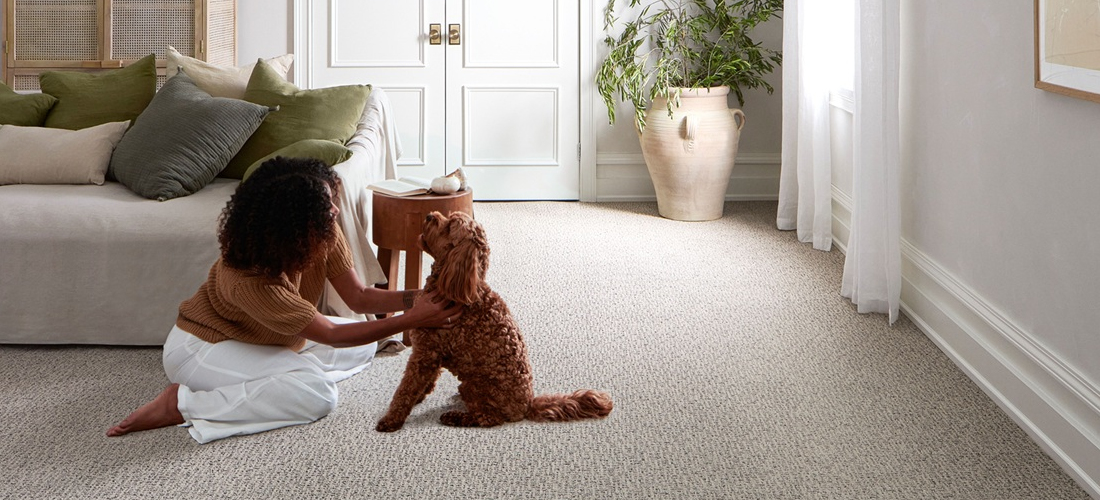
Pets and flooring have a complicated relationship. Claws scratch surfaces. Accidents soak into materials. Shedding accumulates in fibres. Different flooring types handle these realities very differently, and the whole-house flooring guide sets out how this decision fits with the rest of the home, and choosing the right flooring for a pet household means matching specific specifications to the specific pets in your home.
Pets, children and sheer foot traffic all wear a floor differently, which is why we keep them as separate guides: this one, flooring for kids and families, and flooring for high-traffic areas. There is no single best flooring that works universally for every pet household. The right choice depends on the pets, their habits, and how the household actually lives day to day.
The Short Answer
Start with your animal. A fourteen-year-old cat and an eighteen-month-old retriever ask opposite things of a floor, and most pet flooring advice is written for a household that does not exist.
For claws and accidents in the rooms pets actually use, vinyl plank at twenty mil or thicker and porcelain tile are the two that do not care. Laminate at AC4 or AC5 resists scratching better than either, provided standing liquid never sits on it. Hardwood will show a dog, and that is a question about how much patina you can live with, not a spec you can buy your way past.
Where a pet sleeps, carpet is still the kindest surface underfoot — solution-dyed nylon over a moisture-barrier underpad. The underpad is the part that decides whether one accident becomes a permanent smell.
Why Pet-Friendly Flooring Performs Differently
Pets create three specific stresses on flooring that other household members don’t. Claw wear comes from cats and dogs scratching surfaces during normal movement, and the wear is more pronounced with larger dogs and untrimmed claws. Accidents happen even with house-trained pets occasionally—older pets, sick pets, and anxious pets contribute more, but every pet household experiences the occasional incident. Shedding and dander embed in soft surfaces and accumulate between hard surfaces in ways that don’t happen in pet-free homes.
Pet-friendly flooring handles all three of these on reasonable maintenance, without demanding extraordinary cleaning routines. The flooring that handles one well but fails on another tends to disappoint over years.
| Material | Claws | Accidents | Comfort for the pet | Where it belongs |
|---|---|---|---|---|
| Vinyl plank, 20-mil or thicker | Handles claw contact well; larger dogs can mark thinner wear layers | Waterproof at the surface; individual click-lock planks can be replaced | Warm enough | Main traffic zones, kitchens, entryways |
| Laminate, AC4 to AC5 | Best of any material — the aluminium-oxide layer beats vinyl for scratches | Waterproof grades only; standard laminate swells at edges | Warm enough | Living rooms and hallways, where claws matter more than accidents |
| Porcelain tile | Nothing marks it | Nothing stains it | Firm and cold; pets avoid it for sleeping | Pet entryways, mudrooms, kitchens, bathrooms |
| Hardwood | Ages visibly; harder species and matte finishes hide it best | Poor — standing water is the real risk | Comfortable | Rooms where the look outweighs the wear |
| Carpet, solution-dyed nylon | Not the failure mode | Needs a moisture-barrier underpad; colour is locked into the fibre | The most pet-comfortable surface there is | Bedrooms and family rooms where the pet actually sleeps |
What Makes Flooring Suitable
Several specifications matter most in a pet household.
- Scratch resistance — claws contact the surface during normal movement, and surfaces that mark easily develop visible wear faster than they should.
- Stain resistance — accidents happen, and a surface that releases them instead of absorbing them produces better long-term results.
- Easy cleaning — standard household products need to handle the majority of pet messes without requiring specialty chemicals.
- A moisture barrier — accidents that reach the subfloor produce odour problems that surface cleaning cannot address.
- Hardness — dense materials show fewer dents from concentrated pet weight, which becomes a real concern with larger dogs.
Vinyl Plank for Pets
Modern vinyl plank is one of the most practical pet-friendly flooring choices in Canadian homes for several reasons that compound. Quality LVP is fully waterproof at the surface—accidents clean up without permanent damage. The wear layer at twenty mils or thicker handles claw contact well in pet households. SPC rigid-core construction adds dent resistance for larger pets, which matters more as dogs grow.
Click-lock installation also matters for pet households specifically because individual planks can be replaced if specific spots are damaged—a level of repair flexibility that glue-down installations don’t offer.
Does Vinyl Plank Scratch From Dog Claws?
Vinyl plank is more scratch-resistant than hardwood but not scratch-proof. Larger dogs with untrimmed claws can mark thinner wear-layer products over time, and the damage is usually more visible on darker colours and matte finishes. Twenty-mil and thicker wear layers handle pet traffic well. The most effective protection across any flooring: keep claws trimmed, place runners in main pet pathways, and clean grit out of high-traffic areas regularly. Most pet damage comes from grit acting as sandpaper, not directly from claws.
Laminate for Pets
Premium laminate at AC4 or AC5 ratings is exceptionally scratch-resistant—the aluminum-oxide wear layer handles cat and dog claws better than vinyl plank in most cases. For homes where scratch resistance is the top pet-related concern, premium laminate often outperforms premium vinyl.
Where laminate falls short for pet households is moisture sensitivity. Standard laminate is water-resistant but not waterproof, and pet accidents at edges or seams can cause swelling over time. Modern waterproof laminate addresses this and works well in pet households at AC4 or AC5 ratings, combining the scratch resistance laminate is known for with the moisture resistance pet households need.
Hardwood and Pets
Hardwood works in pet homes, but it shows its history. Scratches and dents accumulate over time, particularly with larger dogs that move quickly across the floor. Several factors reduce visible damage. Harder species like hickory at Janka 1820, white oak at 1360, and maple at 1450 handle claws better than walnut at 1010 or pine. Textured finishes like wire-brushed or hand-scraped variants hide minor scratches because the surface is already varied. Matte and satin finishes hide wear better than high-gloss finishes do.
Hardwood can also be refinished, which returns the floor to near-new appearance after years of pet wear. That refinishing potential is part of what makes hardwood last decades in pet households that would otherwise burn through other flooring options.
What Hardwood Holds Up Best Against Dogs?
Harder species perform best. White oak (Janka rating ~1360), hickory (~1820), and maple (~1450) hold up to pet traffic noticeably better than softer species like pine or birch. Texture matters too: wire-brushed and hand-scraped finishes hide minor scratches and dents because the surface is already varied. Sheen matters as well—matte or low-sheen finishes hide wear better than high-gloss. With these choices, hardwood can work well in pet households, especially when paired with strategic rug placement.
Bring a photo of the dog. Book an appointment and we will spec a wear layer to the animal, not to the room. In-home visits on request.
Tile for Pets
Porcelain tile shrugs off claws and accidents entirely. The hardness handles dropped objects, large dogs, and aggressive cleaning in ways that no other flooring can match.
Where tile is less ideal in pet homes is comfort. Tile is firm and cold underfoot, which most pets don’t enjoy as a primary sleeping or lounging surface. Pets gravitate to softer areas like carpet, rugs, or beds rather than tile. Tile excels in pet entryways, mudrooms, kitchens, and bathrooms where pet messes concentrate—but it tends to be a less-loved surface in main living rooms where pets actually want to be.
Carpet and Pets
Carpet is the most pet-comfortable flooring, but it requires more careful management to maintain. Solution-dyed nylon is the standard pet-household carpet choice because the colour is locked into the fibre during manufacturing—even bleach-based stain treatments don’t affect appearance, and the fibre resists most stains better than other fibres do.
Cut-pile carpets are safer than loop-pile (Berber) for cats and small dogs because loops can snag on claws. A moisture-barrier underpad is essential—it prevents accidents from reaching the subfloor where odour becomes nearly impossible to remove, and the small additional cost of moisture-barrier pad is one of the highest-leverage upgrades available in pet households.
What Carpet Is Most Pet-Friendly?
Solution-dyed nylon and olefin (polypropylene) carpets resist staining best because the colour is locked into the fibre. Looped Berber styles can snag on claws, so cut-pile or low-loop styles work better in pet households. Density and twist count matter for durability—denser carpets hold up to high-traffic pet paths better than plush low-density options. Pair pet-friendly carpet with a quality moisture-barrier underpad to handle accidents before they reach the subfloor.
How Pet Traffic Changes Where Materials Matter
Different pet households have different pressure points, and the right flooring spec depends on where the pressure actually concentrates. For households with large dogs, scratch resistance in main pathways matters most—vinyl plank with twenty-plus mil wear layer or premium laminate handles this well. For households with multiple pets, accident management becomes the priority—moisture-barrier underpad under any new carpet, with vinyl plank or tile in zones where messes concentrate. For households with cats, claw resistance matters and loop-pile carpet should be avoided; cut-pile or hard surfaces throughout work better. For households with aging pets, accident accommodation becomes the priority—plan flooring assuming occasional accidents will be a regular feature of life.
Cleaning and Maintenance
Pet households require more frequent cleaning regardless of flooring choice, and the cleaning rhythm matters more than in pet-free homes.
- Vacuum twice weekly at minimum — to manage pet hair and dander.
- Address accidents within the first hour — the difference between a fresh accident and a twelve-hour-old one is often the difference between cleanable and permanent.
- Use enzyme-based cleaners — standard household cleaners do not break down uric acid, and enzyme cleaners do.
- Schedule professional cleaning every six to twelve months — for carpet households, where buildup happens faster than home cleaning can address.
The Pet Stain & Odour Removal Guide covers detailed accident response in more depth than the flooring decision article can include without becoming unwieldy.
Specifying for the Pets You Actually Have
- Start with the animal, not the category — a fourteen-year-old cat and a young retriever are not the same brief. Match the floor to real movement patterns, not to an imagined average pet household.
- Durable and waterproof in the traffic zones — entryways and kitchens, where the mess concentrates.
- Comfortable where they sleep — bedrooms and family rooms, with rugs if the floor is hard.
- Moisture-barrier underpad on any new carpet in a pet household. Not optional.
Related Guides
A few other guides connected to this topic:
- How to Choose the Right Flooring for Your Home in Ontario (Complete Guide) — The complete flooring decision pillar.
- Best Flooring for Kitchens in Ontario: Durable, Waterproof & Easy-to-Clean Options — Care and cleaning guidance for this material.
- Vinyl vs Laminate Flooring: What’s the Difference and Which Should You Choose? — Direct comparison with related materials.
- How to Care for Hardwood Floors in Winter: Salt, Moisture & Humidity — Care and cleaning guidance for this material.
- Floor, Carpet & Rug Care Guide: How to Clean and Protect Every Surface in Your Home — The complete cleaning and maintenance pillar.
- How to Care for Area Rugs at Home (Daily & Weekly Maintenance) — Care and cleaning guidance for this material.
- Professional Flooring Installation — how we handle transitions and underpad on a pet-household install, where the details decide how long the floor lasts.
- Why Alexanian — a century in flooring and 17 Ontario showrooms behind the recommendation.
Want Help Choosing Pet-Friendly Flooring That Actually Holds Up?
The best way to choose what’s right for your home is to see the options side by side. Book an in-store appointment at one of our 17 Ontario showrooms and one of our consultants will walk you through what fits your space, your needs, and your budget — or request an in-home visit if that’s easier.
Frequently Asked Questions
What is the most pet-friendly flooring?
Luxury vinyl plank (20+ mil wear layer), porcelain tile, and premium AC4-AC5 laminate all perform well. Solution-dyed nylon carpet works in bedrooms and dens with moisture-barrier underpad.
Does vinyl plank scratch from pet claws?
Vinyl plank is more scratch-resistant than hardwood but not scratch-proof. Twenty-plus mil wear layer handles pet households well; thinner wear layers can show wear from larger dogs.
What hardwood is best for homes with pets?
Harder species like hickory, white oak, and maple, with textured finishes like wire-brushed or hand-scraped, and lower-gloss finishes hide pet wear best.
Can carpet work in pet homes?
Yes, with the right specs: solution-dyed nylon fibre, cut-pile construction, and moisture-barrier underpad. Cleaning and maintenance habits matter more in pet households.