
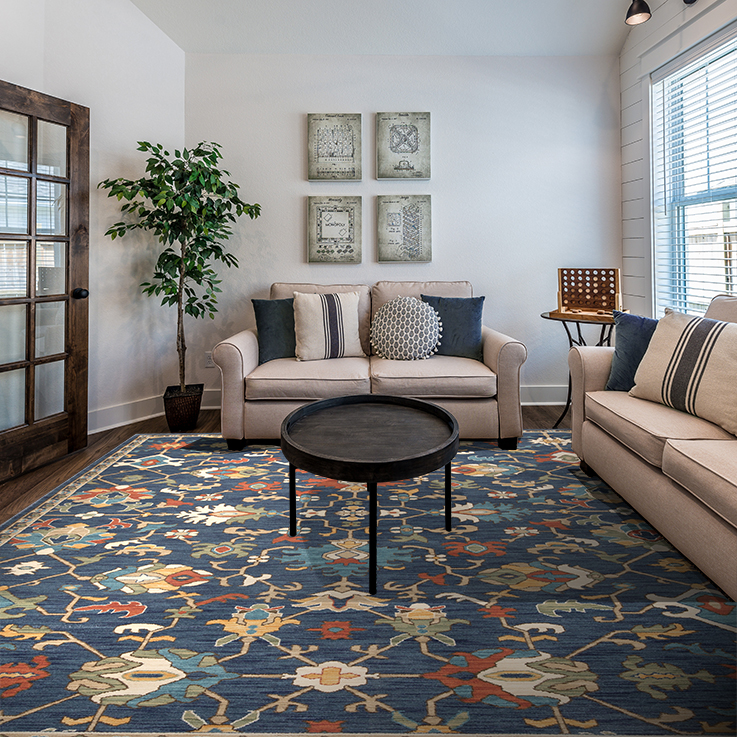
Most rug regret traces to a small number of recurring mistakes—wrong size, wrong material for the room, wrong placement, skipped pad. Each is preventable with the right planning, and knowing the patterns in advance saves the cost of replacing rugs that should have worked from the start.
These aren’t subtle mistakes. They’re the same patterns that show up across hundreds of residential rug purchases, and they’re predictable enough that you can avoid them deliberately rather than discovering them after the rug is in your home.
Table of Contents
- The Most Common Mistake: Choosing a Rug Too Small
- Choosing on Style Rather Than Function
- Ignoring How the Space Is Actually Used
- Skipping the Rug Pad to Save Money
- Material-Room Mismatches
- Forgetting About Maintenance
- Placing the Rug Without Planning the Layout
- Pattern Conflicts
- Buying Without Sampling at Home
- A Simple Way to Avoid Most Mistakes
- When the Wrong Choice Becomes Clear
- Related Guides
- Want Help Choosing a Rug That Actually Works in Your Space?
- Frequently Asked Questions
The Most Common Mistake: Choosing a Rug Too Small
Wrong sizing is the most common rug mistake by a wide margin. A rug that floats in the centre of a room with the furniture stranded on bare floor around it makes the room feel disconnected. The eye reads the rug as a placemat rather than the anchor it was meant to be.
The rule for living rooms is that all front legs of major furniture should sit on the rug, or the rug should be large enough that all four legs fit comfortably. Standard sizes that typically work: 8×10 minimum for most living rooms, 9×12 for larger living rooms, with 24 inches beyond dining tables on all sides. When in doubt, size up. Slightly oversized rugs are far less noticeable than slightly undersized ones, and the cost difference between two adjacent rug sizes is usually small relative to the rug itself.
What Size Rug Do Most Living Rooms Actually Need?
Most standard living rooms (12×14 to 14×18) need an 8×10 rug at minimum, with 9×12 being more common. The rug should be large enough that all front legs of major furniture sit on it, or all four legs in the case of armchairs. Smaller accent rugs (5×8 and below) often look right in catalogue photos but feel undersized in actual rooms. When in doubt, go one size up—a slightly oversized rug is much less noticeable than a slightly undersized one.
Choosing on Style Rather Than Function
Beautiful rugs that fail in the actual room are common. A wool rug under a dining table absorbs spills it was never meant to handle. A jute rug in a kitchen stains easily and breaks down with repeated wet cleaning. Cotton in a high-traffic hallway crushes within months. Each of these can look perfect in showroom photos and prove disappointing within the first year of actual use.
Match material to actual room conditions, not just visual appeal. Style is part of the decision; performance is the other half. The rug that’s beautiful and perfectly matched to how the room is used is the one that stays beautiful for years.
Which Rug Materials Should You Avoid in Specific Rooms?
Avoid wool in dining rooms (absorbs spills and is hard to clean), avoid jute in kitchens (stains easily and breaks down with repeated wet cleaning), avoid silk anywhere with high traffic or pets, and avoid cotton flat-weaves under heavy furniture (they crush and develop permanent indentations). Each material has spaces where it shines—matching the material to the room’s actual demands prevents most rug regret.
Want to get your rug right the first time? Book an in-store appointment and a consultant will steer you clear of the common mistakes — in-home visits on request.
Ignoring How the Space Is Actually Used
Rugs that look right in showroom photos do not always fit how rooms are actually used. Heavy furniture moving frequently causes wear at specific points the rug wasn’t built to handle. Spills happening regularly demand stain-resistant fibres rather than aspirational beauty. Pets sharing the space introduce claws, accidents, and hair that some materials handle better than others. Kids playing on the floor make comfort underfoot more important than premium aesthetic.
Match the rug to actual use rather than idealized use. The room that hosts holiday entertaining once a year doesn’t need the same rug as a primary family room used every day.
Skipping the Rug Pad to Save Money
Rugs without pads shift, slide, wear unevenly, and offer no protection to the floor underneath. The pad is one of the highest-leverage purchases in the rug category—it affects safety, longevity, and how the rug feels underfoot. Skipping the pad to save five to ten percent of the rug cost typically reduces rug life by thirty percent or more, which is a poor trade by any measure.
Buy pads with rugs rather than treating them as optional add-ons. The pad isn’t an accessory; it’s part of the rug system, and the system works best with all of its parts.
Material-Room Mismatches
Several specific material-room mismatches recur often enough to be worth naming explicitly. Wool in dining rooms absorbs spills and is hard to clean. Jute in kitchens stains and breaks down with wet cleaning. Cotton in high-traffic areas crushes quickly and never recovers. Silk anywhere with high traffic or pets fails fast. Each material works beautifully in spaces that match its strengths and disappoints in spaces that don’t.
Forgetting About Maintenance
Different rugs require different maintenance, and the difference matters. Wool needs gentle vacuuming, professional cleaning every two to three years, and tolerates most stains naturally. Synthetic rugs handle standard household vacuuming and respond well to professional cleaning every twelve to eighteen months. Natural fibres like jute and sisal have minimal cleaning options and typically need replacement when soiled significantly rather than restoration.
Choose rugs with maintenance willingness in mind. The most beautiful rug is wasted if it goes uncared for, and the rug that fits an actual cleaning routine is the one that stays beautiful for years.
Placing the Rug Without Planning the Layout
Placement determines whether the rug works in the room. Plan placement before purchase by using painter’s tape on the floor to mark out the rug’s position. Verify that furniture placement aligns with rug size and orientation. Check that traffic patterns flow over (not around) the rug. Confirm that the rug visually anchors the seating area or zone it should define.
Without this planning, beautifully chosen rugs end up in placements that fight the room. The rug becomes something to walk around rather than something the room is built around.
Pattern Conflicts
Pattern coordination affects whether the rug works visually. A bold-pattern rug paired with bold-pattern furniture creates visual overload that no single element can rescue. A bold-pattern rug paired with neutral furniture lets the rug become the focal point, which is often exactly what the room needs. Neutral rugs with bold furniture keep the furniture visually prominent. Multiple competing patterns in close proximity feel busy and fatiguing.
Plan the visual hierarchy of the room before committing to a rug pattern. Decide which element should carry visual weight, and choose accordingly.
Buying Without Sampling at Home
Rugs look very different in showrooms than in homes. Lighting, surrounding wall colour, adjacent furniture, and natural light all affect how the rug reads. Many rug retailers offer take-home sampling or in-home consultation, and even sampling smaller swatches reveals colour and texture differences from showroom impressions.
Sample before committing to expensive rugs. The rug that looked perfect under showroom lighting and felt right in your home is the one that will continue to feel right for years.
A Simple Way to Avoid Most Mistakes
A short checklist prevents most rug regret. Measure the room and furniture and mark out the proposed rug size on the floor with painter’s tape. Match material to actual room conditions and use rather than aspirational use. Consider maintenance requirements honestly. Sample at home in real lighting before final commitment. Buy a quality pad with the rug.
Following these steps eliminates most of the patterns that produce rug regret.
When the Wrong Choice Becomes Clear
Sometimes rugs prove to be wrong despite planning. Wrong-size rugs can be re-purposed to a smaller room before buying correctly for the original space. Wrong-material rugs can move to a more appropriate room. Damaged rugs from improper match can be replaced with appropriate spec.
Treating these as learning experiences rather than permanent commitments helps homeowners arrive at the right rug for each space over time.
Related Guides
A few other guides connected to this topic:
- How to Choose the Right Area Rug for Your Space (Size, Material & Placement Guide) — The complete area rug pillar.
- Area Rug Size Guide (Room-by-Room): How to Choose the Right Rug Size for Your Space — Design coordination guidance.
- Do You Need a Rug Pad? What It Does, Why It Matters, and When It Makes a Difference — Underpad and protection details.
- Area Rug Cleaning Guide: How to Clean Rugs at Home & When to Use Professional Rug Washing — Closely related topic in this category.
- How to Choose the Right Carpet for Your Home in Ontario (Complete Guide) — The complete carpet pillar.
- How to Choose the Right Flooring for Your Home in Ontario (Complete Guide) — The complete flooring decision pillar.
Want Help Choosing a Rug That Actually Works in Your Space?
The best way to choose what’s right for your home is to see the options side by side. Book an in-store appointment at one of our 17 Ontario showrooms and one of our consultants will walk you through what fits your space, your needs, and your budget — or request an in-home visit if that’s easier.
Frequently Asked Questions
What is the most common rug mistake?
Choosing a rug that’s too small for the furniture or room. Most living rooms need 8×10 minimum; larger rooms benefit from 9×12 or larger.
How do I choose the right rug material?
Match material to actual room conditions: wool for longevity in moderate use, solution-dyed nylon for high-traffic durability, polyester for affordability in lower-use spaces.
Do I really need a rug pad?
Yes. Pads prevent shifting, extend rug life by 30 to 50 percent, and protect the floor underneath. The single highest-leverage purchase in the rug system.
Should I sample rugs at home?
Strongly recommended for expensive rugs. Showroom lighting differs from home lighting, and surrounding furnishings affect how the rug reads visually.