
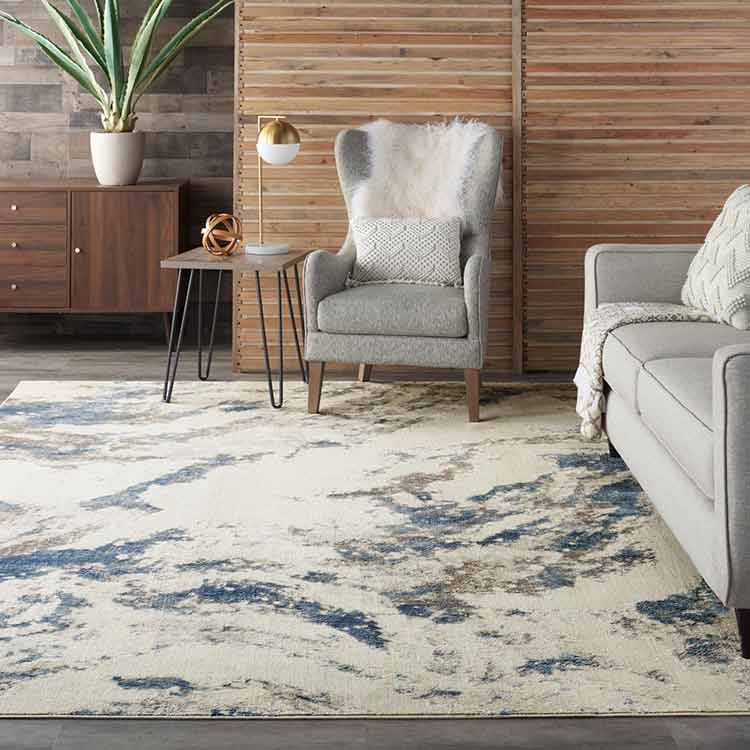
Hardwood does not wear out evenly. It wears out in about six places, and those places are entirely predictable: the first few feet inside the door, the line down the hallway, the corner where everyone turns toward the kitchen, the patch in front of the sink, the bottom stair, and the route the dog takes to its water bowl.
Which makes rug placement a targeting problem more than a decorating one. Covering the right two hundred square feet does more for a hardwood floor than covering the wrong eight hundred, and it is the cheapest intervention available on a floor that costs real money to refinish.
The Short Answer
Yes, substantially — but only where you put them, and only if the pad underneath is the right kind. A rug takes the grit, the footfall and the claws that would otherwise land on the finish. The finish is the part that wears; the wood underneath is barely involved until the finish has gone.
The one warning that matters more than all the advice: the wrong pad damages the floor worse than no rug at all. Given a few years against a hardwood finish, PVC and synthetic rubber backings can leave permanent yellow marks that nothing but sanding will remove. Every rug over hardwood wants a pad specifically labelled safe for hardwood, and that label is the whole of the specification.
How Hardwood Actually Wears
Four mechanisms, and they behave differently from each other.
- Grit — sand and road salt underfoot working as an abrasive against the finish. This is the dominant one and it is worst within a few feet of every exterior door.
- Pivot points — wherever people change direction, the shoe twists rather than rolls. A pivot spot takes concentrated abrasion the rest of the floor never sees. That is why wear shows up in patches and never evenly.
- Claws — scratches from ordinary movement, concentrated where a dog accelerates or stops.
- Sunlight — not abrasion at all. UV fades the finish in the shape of the window, leaving lighter and darker zones that no amount of cleaning evens out.
Grit, pivoting and claws are all mechanical, so a physical barrier works well against them. Sun fading is the one a rug addresses by accident, and it creates its own complication further down this page.
What the Rug Intercepts
| Wear source | What it does to bare hardwood | What happens with a rug |
|---|---|---|
| Tracked-in grit | Ground into the finish along walking lines | Falls into the pile and stays below foot level until vacuumed |
| Foot traffic | Abrades the finish, worst at pivots | Compresses pile; the floor takes almost none of it |
| Pet claws | Fine scratches through the finish | Contacts fibre; scratches do not reach the wood |
| UV from windows | Uneven fading in the window’s shape | The rug fades in the floor’s place |
| Furniture legs | Dents and pressure marks | Load spreads across pile and pad |
The rug becomes the wear surface. That is the entire mechanism, and it is also the reason a rug is a consumable in a way a floor is not — it is absorbing damage on the floor’s behalf, and eventually it has absorbed enough.
Floors That Benefit Most
| Floor | Protective benefit | Why |
|---|---|---|
| Solid hardwood | Highest | Finish wear is the failure mode, and refinishing is expensive |
| Engineered hardwood | Highest, arguably more | A thin wear layer has fewer refinishes in it, so each one you delay counts for more |
| Vinyl plank | Moderate | Handles traffic better, but grit still dulls the wear layer in busy zones |
| Laminate | Moderate | Wear layer cannot be refinished at all, so prevention is the only option |
| Tile | Minimal | Effectively unaffected underfoot; a rug here is for comfort and warmth |
Worth noticing that engineered hardwood, which people often assume needs less protecting because it is more stable, arguably needs more. Stability and wear-layer thickness are separate properties — solid versus engineered hardwood covers where each one is genuinely stronger. On laminate the case is different again and simpler: there is no refinishing, so a scratch is permanent, which makes the runner in the hallway the entire maintenance strategy.
Where to Put Them
Ranked by how much floor each one saves per square foot of rug.
- The first six to eight feet inside every exterior door. This is where the grit arrives, and stopping it here stops it reaching everywhere else too. Nothing else on this list comes close.
- Hallways between the bedrooms and the living space. Narrow, so every trip uses the same eighteen inches of floor.
- Pivot points. The corner by the island, the spot at the sink, the bottom of the stairs. Small rugs, disproportionate effect.
- Pet routes. Bed to bowl, bowl to door. A runner along that line costs a fraction of refinishing the room it crosses.
- In front of seating. Feet shift constantly in the same small area for hours at a time.
Note what is not on the list: the middle of a room nobody crosses. Scattering rugs to be thorough spends money where there is no wear to prevent. Rugs for high-traffic areas covers what to buy for the spots that do matter, since a rug in an entry is a very different product from a rug in a bedroom.
Do Rugs Help With Pet Scratches?
Yes, and this is one of the clearer cases. A rug along a pet’s habitual route takes almost all of the claw contact that would otherwise reach the finish, and the benefit concentrates exactly where a dog pivots, accelerates or stops short — by doors, at the foot of the stairs, and on the run between favourite spots. Pair it with a pad, because a rug that slides under an accelerating dog is dragging grit across the floor it was bought to protect.
Tell us where the wear is and we will tell you what size runner solves it — arrange an in-store visit and bring photos of the floor, including the bits you are worried about.
The Pad Is Half of the Protection
A rug over hardwood without a pad is doing perhaps two-thirds of the job it could be doing, and running a risk it need not run.
- It stops the rug travelling, and a travelling rug grinds whatever is trapped beneath it across the finish.
- It removes the friction at the rug-to-floor interface during ordinary use.
- It spreads furniture load across the pad rather than into four points.
- It leaves a thin air gap so the floor is not sealed against a solid surface.
Felt-and-rubber and natural rubber are the two to use, and only with the hardwood-safe label on the packaging. The rug pad guide compares the types properly, including the ones to keep away from wood.
When a Rug Damages the Floor It Was Protecting
This is the honest half of the answer, and every item is a case where the rug caused the problem it was bought to prevent.
- The wrong pad. PVC, latex or adhesive backings against a hardwood finish, given time, leave staining or yellowing that needs sanding out. The most common and the most expensive.
- A rubber-backed rug with no pad at all. Same reaction, same result, and it surprises people because the rug was sold as non-slip.
- Moisture trapped underneath. A wet rug left down will cup the boards or stain them. Take it up and dry the floor, not just the rug.
- Dragging. Hauling a rug across the floor to reposition furniture scratches the finish in one movement. Lift it, or roll it.
All four are avoidable and none of them is a reason to skip the rug. They are a reason to spend twenty dollars more on the pad. If something has already gone wrong down there, can hardwood floors be repaired covers what is fixable without a full refinish.
A Neglected Rug Stops Protecting
The mechanism only works while the rug has capacity left. Grit held in the pile is grit off the floor; grit packed solid into a saturated pile is an abrasive mat sitting on the finish, redepositing what it can no longer hold.
Which puts an obligation on the arrangement: vacuum the protective rugs twice a week, have them washed properly before the trapped grit starts working as an abrasive in its own right, and accept that a rug in an entry is a five-to-ten-year item. Replacing an entry runner on that cycle is dramatically cheaper than refinishing the floor it was covering. Caring for area rugs at home has the full routine.
The Tan Line Problem
Because the rug shields the finish from sunlight as well as from feet, the floor under it ages more slowly than the floor around it. Lift a rug after eight years in a sunny room and there is often a visible rectangle, lighter and less worn than its surroundings.
It is a real effect and a minor one. It evens out at the next refinish, and it fades on its own once the floor is uniformly exposed. Rotating rugs every three months keeps the differential small in the meantime — the same habit that stops the rug developing its own wear line. Species matters here too — some woods shift colour far more in sunlight than others, and the species guide covers which.
Protecting a Hardwood Floor With Rugs, in Order
- Walk the floor and find the wear. It will already be visible in the six places listed above.
- Cover the entries first. Everything else is downstream of the grit that gets in.
- Add runners to the hallways and small rugs to the pivots.
- Buy a hardwood-safe pad for every one of them, and read the label, not the marketing.
- Vacuum them on the same schedule you would a floor you cared about, and rotate every three months.
Protection is one reason rugs belong on wood floors and it is the one least often mentioned in the showroom; warmth, sound and defining a seating area are the others, and layering rugs over hard floors deals with those. If the whole floor is up for discussion, our hardwood guide for Ontario homes is the place to start, and our area rug guide handles size, fibre and placement together.
Related Guides
A few other guides connected to this topic:
- How to Choose the Right Area Rug for Your Space (Size, Material & Placement Guide) — The complete area rug pillar.
- Do You Need a Rug Pad? — The half of the protection that is not the rug.
- Layering Rugs Over Hard Floors — The design side of the same decision.
- Hardwood Floor Maintenance Guide — Looking after the floor itself.
- Hardwood Flooring Guide for Ontario Homes — The complete hardwood pillar.
- Solid vs Engineered Hardwood — Why wear-layer thickness changes the answer.
- Carpet vs Hardwood vs Vinyl: Choosing the Right Flooring by Room — If the floor itself is still open.
- Flooring Installation — What we do when the floor needs replacing rather than protecting.
- Why Alexanian — Floors and rugs from the same people.
Want Help Choosing Rugs That Protect Your Floors?
The best way to choose what’s right for your home is to see the options side by side. Book an in-store appointment at one of our 17 Ontario showrooms and one of our consultants will walk you through what fits your space, your needs, and your budget — or request an in-home visit if that’s easier.
Frequently Asked Questions
Do area rugs prevent scratches on hardwood floors?
In the areas they cover, largely yes. A rug intercepts the grit and the claw contact that scratch the finish, and the effect is biggest in the concentrated wear zones — entries, hallways and pivot points — rather than spread across a whole room.
Where should I place rugs to protect hardwood?
Inside every exterior door first, then hallways, then pivot points where people change direction, then pet routes, then in front of seating. Entries are worth more than the other four combined, because they stop grit before it is distributed through the house.
Do rug pads help protect floors?
They do a specific job: stopping the rug from sliding and grinding trapped grit into the finish, cutting friction, spreading furniture load, and keeping a thin air gap under the rug. A hardwood-safe pad is not an optional extra on a wood floor.
Can rugs damage hardwood floors?
They can, in four ways: a PVC or synthetic-rubber pad reacting with the finish, a rubber-backed rug used with no pad, moisture left trapped underneath, and dragging the rug across the floor. The first is the one that turns up most often and the one that needs sanding out.
Will the floor under the rug end up a different colour?
Slightly, in a room that gets direct sun — the covered area stays lighter and less worn. It is usually minor, it levels out once the rug is gone, and refinishing removes it entirely. Turning the rug twice a year keeps the difference small.